The Serpent's Kiss: A Mekong Tradition
In the humid labyrinth of Vietnam's Mekong Delta, where lifeblood flows through its countless rivers and canals, traditions are as deeply rooted as the ancient banyan trees. Among these, few are as visually arresting, culturally significant, and outright bizarre as the practice of infusing rice wine with venomous snakes. Specifically, the king cobra, Vietnam's most formidable serpent, finds its final resting place within the amber depths of Ruou Ran – Snake Wine.
This isn't some roadside novelty for tourists; it's a genuine cultural practice, born from centuries of belief in traditional medicine and the potent mystique of the snake. For many locals, particularly in areas like the U Minh forest region or near the Cambodian border towns, a bottle of Ruou Ran is not just a potent spirit; it's a potent cure-all. We're talking ailments from crippling back pain and rheumatism to the more ambitious claims of revitalizing virility and even curing baldness.
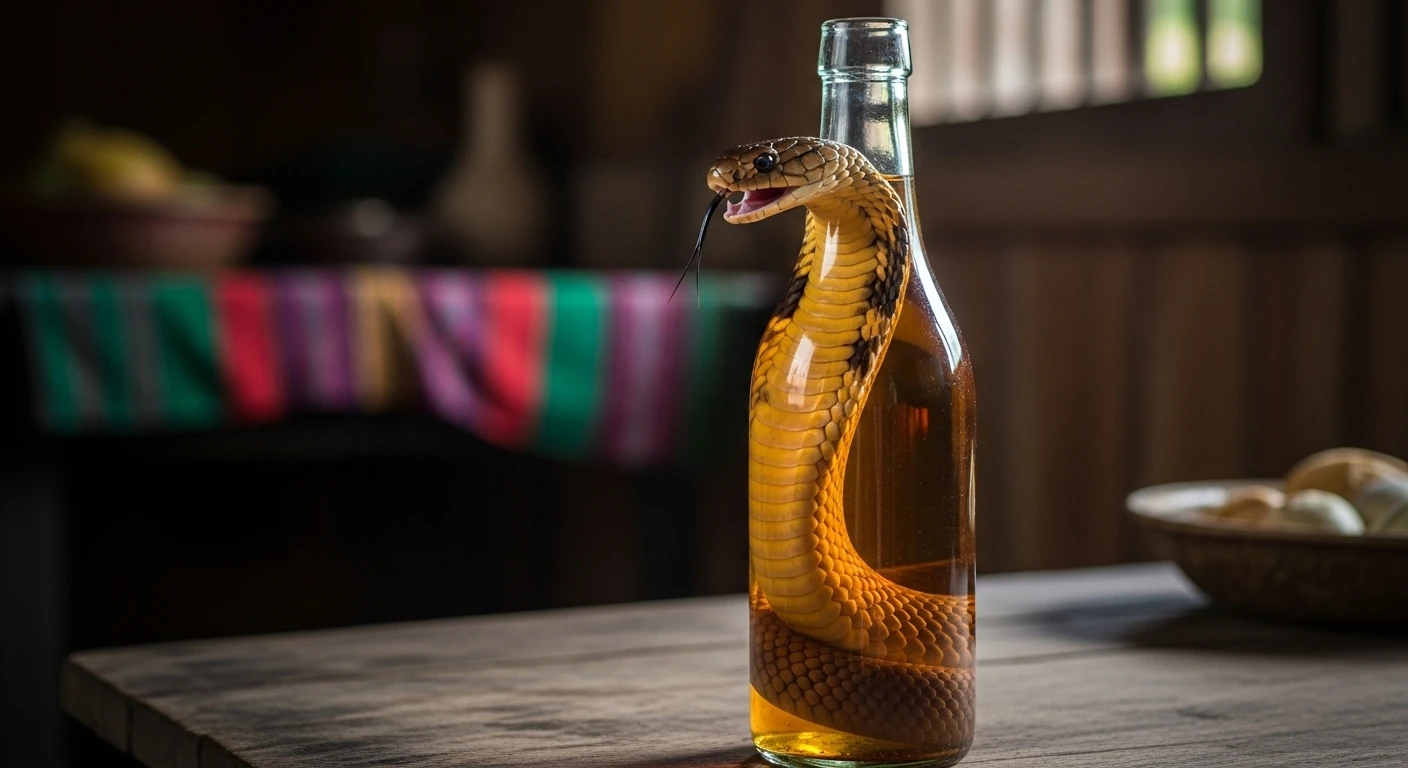
The centerpiece of Ruou Ran: a whole king cobra, preserved in potent rice wine.
Where the Wild Things Are: Hunting the Mekong's Serpents
The journey to a bottle of Ruou Ran begins with the hunt. In the dense mangroves and remote forests of the Mekong Delta, skilled hunters, often locals who have grown up understanding the land and its creatures, track down these elusive reptiles. This is not for the faint of heart. King cobras are apex predators, their potent neurotoxic venom capable of felling an adult human in under an hour. The capture requires precision, respect, and a profound understanding of the snake's behavior.
While some snakes might be sourced from specialized farms or traders, the traditional method often involved wild-caught specimens. There's a certain gravitas attached to the wild-caught, a sense that its potency is amplified by its struggle for survival. After capture, the venom is sometimes carefully extracted – a process that involves its own set of risks and rituals. This venom, paradoxically, is believed to retain some of its medicinal properties when diluted in the high-proof rice wine.
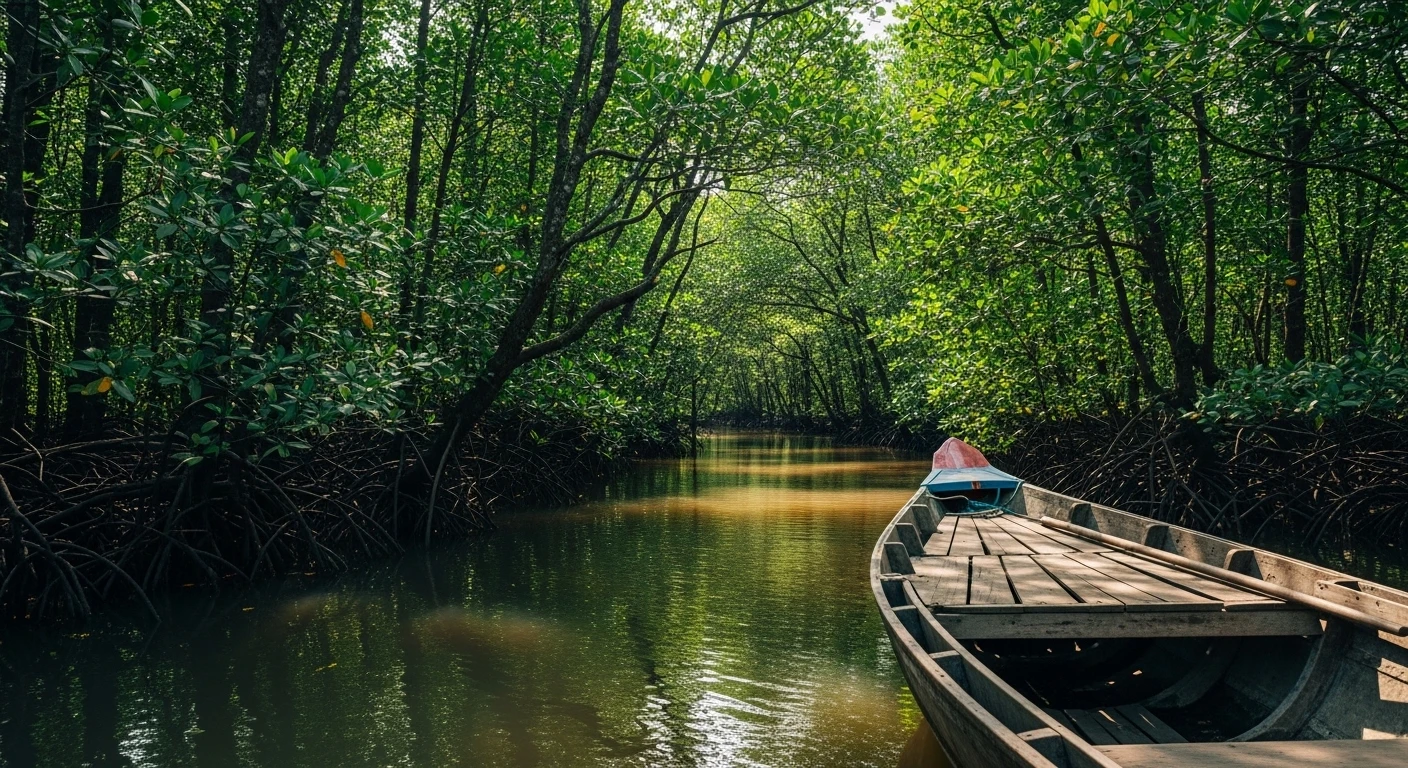
The dense mangroves and waterways of the Mekong Delta are the natural habitat for the king cobra.
The Alchemical Process: Steeping the Serpent
Once prepared, the snake is carefully placed into a large glass jar, often alongside other ingredients believed to enhance its medicinal properties – think herbs, roots, or even smaller animals like geckos or scorpions. The jar is then filled with a potent rice wine, typically 40% ABV or higher. The wine acts as a preservative, and the prolonged steeping, often for months or even years, is where the magic is said to happen.
The alcohol not only preserves the snake's form, giving it an almost mummified appearance, but it also extracts its essence – the proteins, the minerals, and yes, trace amounts of the venom. The visual is confronting: a whole king cobra, frozen in a pose of coiled aggression, its fangs bared, staring out from the amber liquid. It's a testament to a culture that sees power, resilience, and healing within the most fearsome of nature's creations.
Facing the Fear: Taking the First Sip
The true test, of course, is the drinking. Imagine being offered a small glass of this potent brew. The aroma is intensely alcoholic, with a faint, underlying pungency that’s hard to place – perhaps a ghostly whisper of the serpent itself. The color is a rich, dark amber, sometimes with a slight cloudiness.
As a journalist, I've always believed in immersing myself, in tasting the stories I tell. So, when the opportunity arose in a small village near Soc Trang, in the heart of the Mekong Delta, to try Ruou Ran, I couldn't resist. The glass was poured – a small measure, served with a nod of encouragement from the elder who offered it. The first sip hits you like a freight train: pure, unadulterated alcohol, burning its way down your throat.
The initial burn is followed by a strange, lingering aftertaste. It’s not overtly snake-like, not the metallic tang one might imagine. Instead, it's subtly complex, earthy, perhaps with a hint of that herbal infusion. Some describe it as having a smooth, almost velvety finish after the initial alcohol shock. And then there's the psychological element: knowing what you've just consumed. It’s a potent cocktail of bravery, curiosity, and a touch of trepidation.
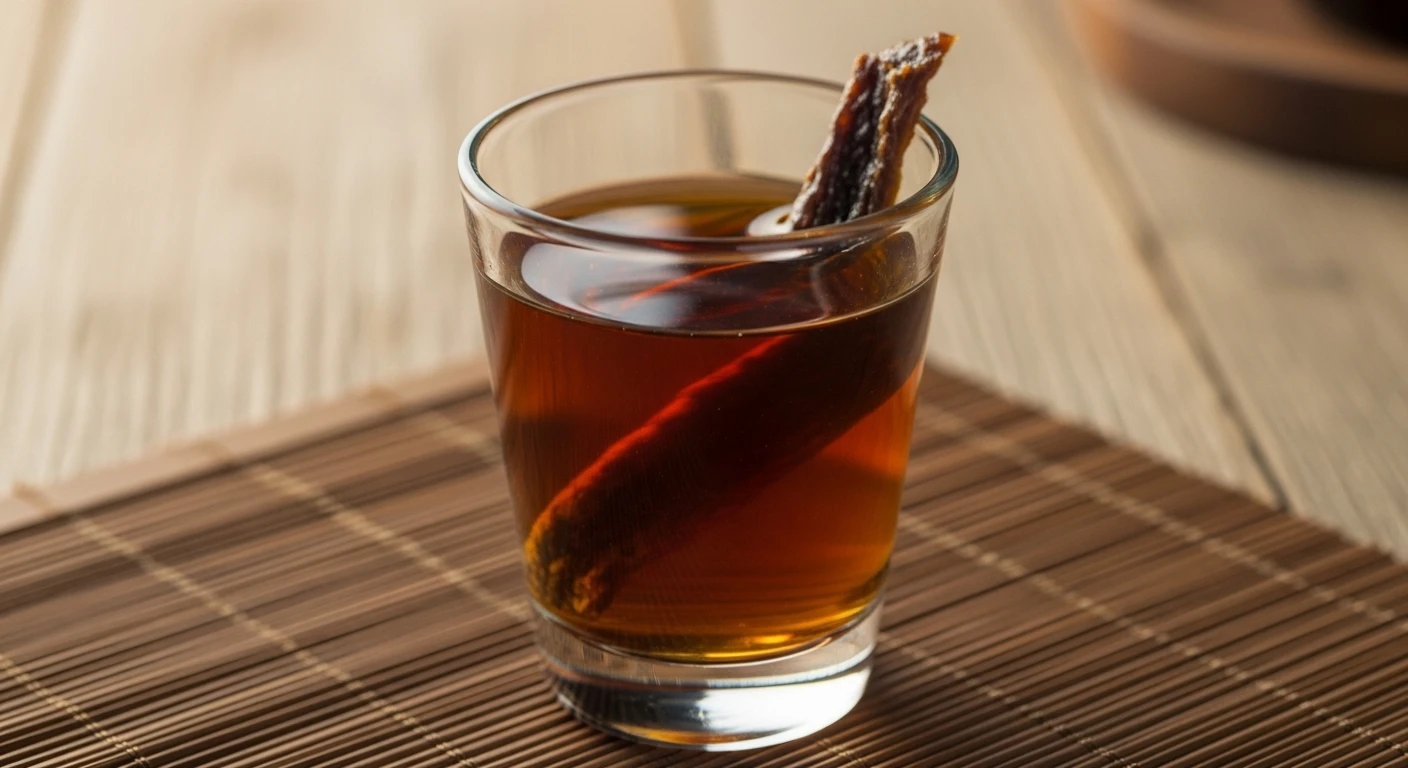
The pour: a small glass of Ruou Ran, often served with local herbs.
The Serpent's Power: Fact or Folklore?
The claims of Ruou Ran's efficacy are vast. Traditional healers point to the snake's vitality and potent venom as sources of natural remedies. The venom itself, particularly in small, diluted quantities, is a complex cocktail of proteins, enzymes, and peptides. Some of these compounds have been studied for their potential medicinal applications, such as in pain management or even as anticoagulants.
However, it's crucial to approach these claims with a dose of skepticism and scientific caution. The primary component of Ruou Ran is, overwhelmingly, alcohol. The placebo effect is a powerful force, and the belief in the cure can be as potent as any alleged medicinal property. Furthermore, the process of steeping a whole snake, including its venom, in high-proof alcohol may neutralize some of the more dangerous aspects of the venom, but it also means the exact dosage and composition of the "active ingredients" are highly variable and impossible to standardize.
"The alcohol itself is a vasodilator," explains Dr. Le Thi Minh, a pharmacologist I spoke with in Can Tho. "It can temporarily relieve pain and stiffness in muscles. If someone believes the snake is helping their circulation, that belief, combined with the alcohol's effects, can lead to a perceived improvement. But it's not a replacement for modern medicine, and consuming large amounts of high-proof liquor carries its own significant health risks."
A Living Tradition in a Changing World
In the modern era, the tradition of Ruou Ran is evolving. Growing awareness of conservation issues and animal welfare, coupled with increased tourism, has led to a more complex landscape. While many rural communities continue this practice, the sourcing of snakes is becoming more regulated, with a greater reliance on farmed or legally traded animals.
For visitors, encountering Ruou Ran can be a profound experience. It's a tangible link to Vietnam's rich history of folk medicine and its deep respect for the natural world, even its most dangerous elements. It speaks to a worldview where the power of life and death, healing and danger, are intertwined. It challenges our Western sensibilities about what is considered "drinkable" or "medicinal."
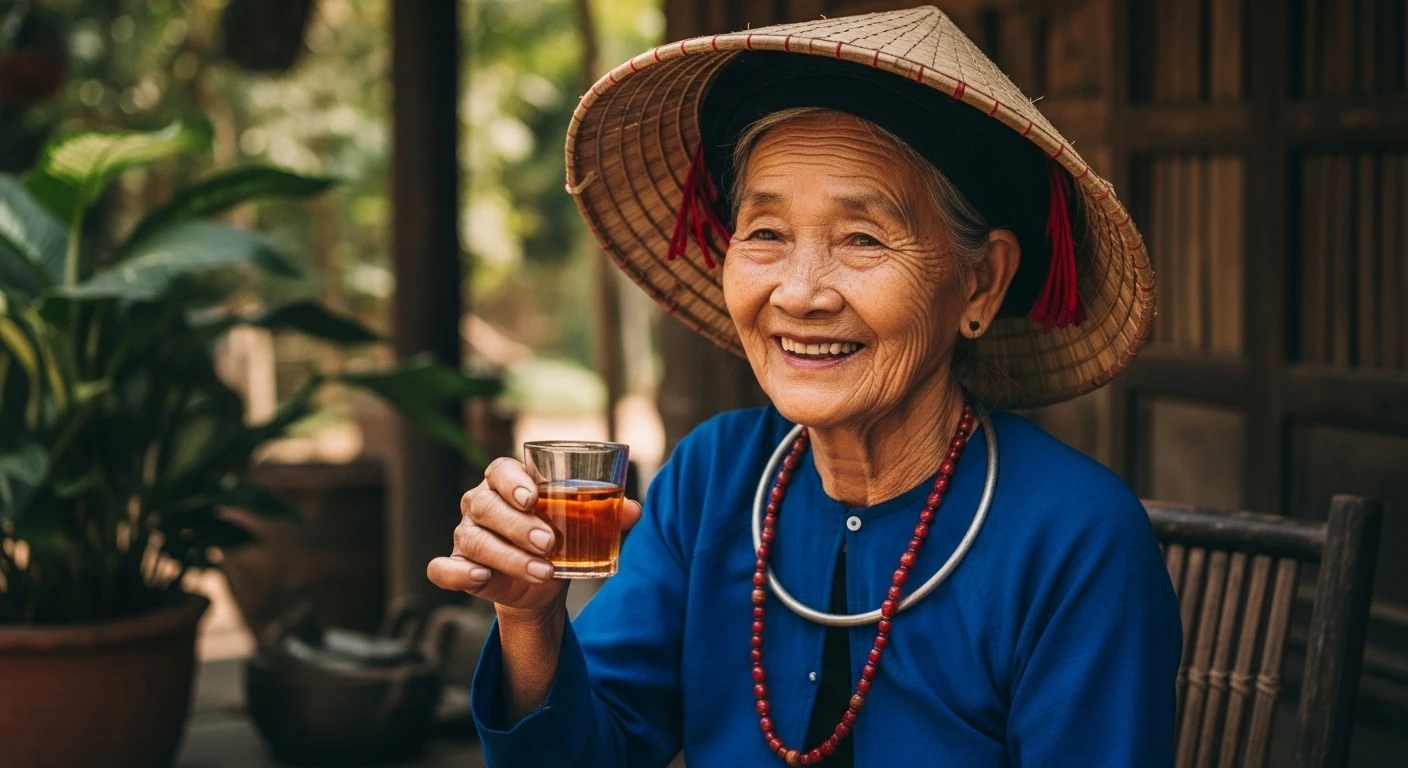
An elder in the Mekong Delta shares a glass of Ruou Ran, a practice steeped in tradition.
Roots in the Delta: Why Here?
The Mekong Delta, with its unique geography and deep cultural history, is the perfect crucible for a tradition like Ruou Ran. This region is a powerhouse of biodiversity, home to a vast array of flora and fauna, including numerous snake species. The prevalence of venomous snakes like the king cobra here means they were a natural, albeit dangerous, part of the local environment and imagination.
Furthermore, the Delta's history of strong folk medicine traditions means that the community has always looked to the natural world for remedies. From medicinal herbs growing along the riverbanks to the perceived strength of potent animals, there's a belief system that celebrates harnessing these natural forces. The isolation of many communities within the Delta also meant that traditional practices persisted longer, passed down through generations without the immediate influence of Western medical advancements.
When you travel through places like the U Minh Thượng National Park or the marshlands of Kien Giang province, you see this connection firsthand. The dense, untamed nature of the landscape mirrors the potent force believed to be contained within the snake wine. It’s not just a drink; it’s a symbol of the wild, untamed power of the Mekong, distilled into a potent, unforgettable experience.
An Adventurer's Rite of Passage?
For the intrepid traveler seeking truly unique experiences, the challenge of trying Ruou Ran is undeniable. It pushes boundaries, confronts preconceptions, and offers a glimpse into a side of Vietnam that few outsiders witness. It’s a story you'll tell for years to come, a conversation starter that encapsulates the raw, untamed spirit of the Mekong.
However, it’s crucial to approach this with responsibility. Always ensure your source is reputable and ethical. Unscrupulous traders may offer products that are not only unsafe but also contribute to the illegal wildlife trade. Seek out opportunities through trusted local guides or established cultural tours that prioritize responsible sourcing and community engagement.
Ready for the Delta?
Experience the vibrant culture and unique traditions of the Mekong.
🌏 Discover Chau DocA Word of Caution: Drink Responsibly
While the allure of Ruou Ran is strong, safety and responsibility must be paramount. The primary risk, beyond the venom's potential residual effects, is the extremely high alcohol content. Consuming too much can lead to alcohol poisoning. Always ensure you are drinking a reputable, well-prepared batch.
If you choose to partake, do so with respect for the tradition and with extreme moderation. It's an experience, a taste of something profound, not a binge. The memory of the snake, the potent spirit, and the warmth of Mekong hospitality will linger far longer than any temporary ailment it claims to cure.