The Universal Call of Sleep
There's a moment, just as the sun hits its zenith, when the world seems to collectively exhale. In many cultures, this is the signal to power down, to find a quiet corner, and surrender to the siren song of a midday nap. It’s a ritual as old as civilization itself, a biological imperative battling the demands of modern life. But in Vietnam, this isn’t merely a pleasant interlude; it’s a sacred pact with the afternoon.
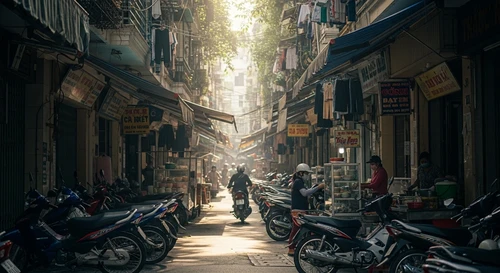
Step onto a bustling street in Hanoi or Ho Chi Minh City at precisely 1 PM, and you’ll witness a remarkable transformation. The frantic energy, the incessant honking, the relentless motion of motorbikes – it all seems to pause, to soften, to recede. Offices dim their lights, shopkeepers pull down their shutters, and construction sites fall silent. It's as if an invisible curtain has fallen, ushering in a collective, country-wide 'Ngu Trua' – the sacred midday nap.
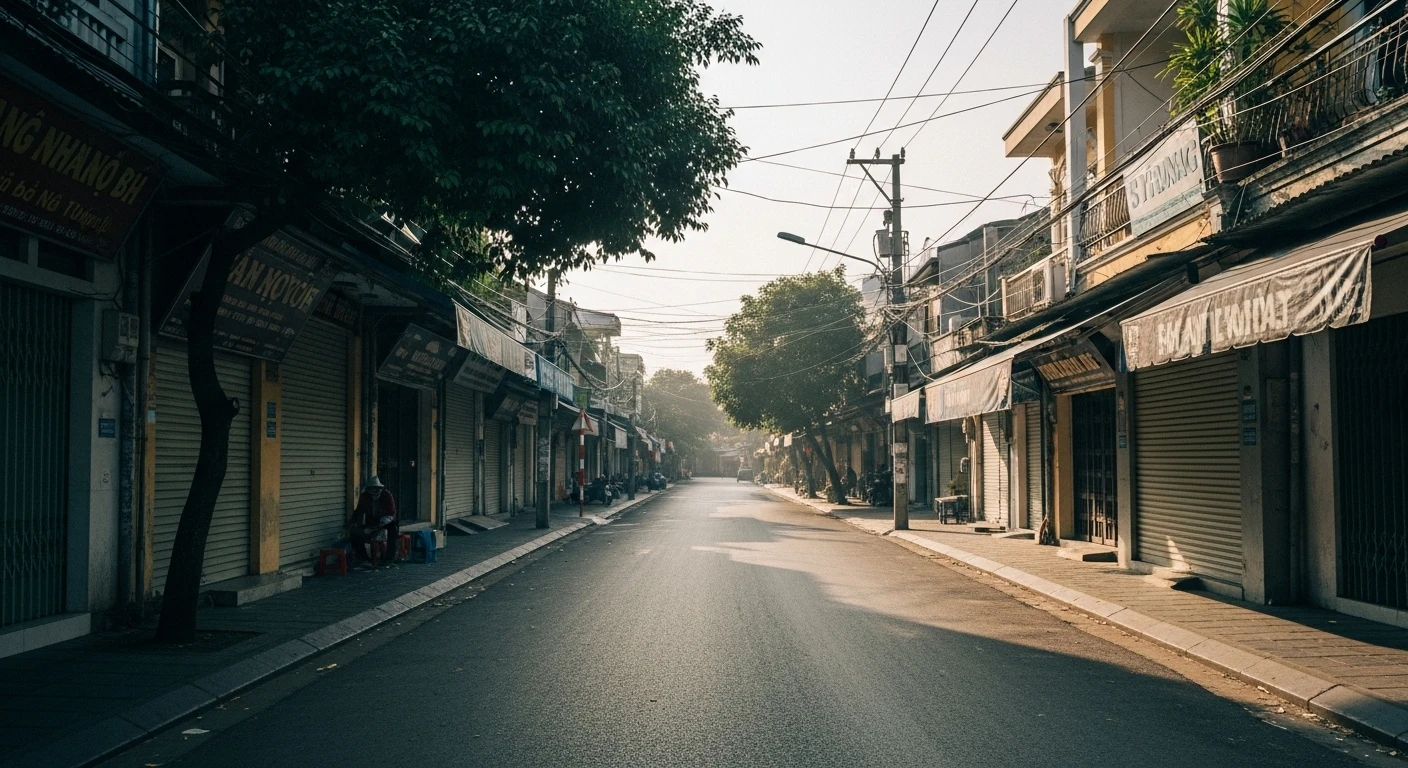
The quiet hour: a typical street in Vietnam at 1 PM, transforming into a landscape of slumber.
The Mekong's Rhythm: Siesta in the South
Nowhere is this midday tranquility more profound than in the languid embrace of the Mekong Delta. Here, life moves at the pace of the rivers, and the heat of the tropical sun dictates the day's rhythm. In the verdant provinces of Can Tho, Ben Tre, or Ca Mau, the midday pause isn't just a cultural norm; it's a practical necessity. The humidity hangs heavy, the sun beats down relentlessly, and even the most dedicated worker finds their energy flagging.
Picture a small roadside stall selling fragrant noodle soup. By noon, the owner might be dozing in a hammock strung between two fruit trees, the gentle sway a prelude to deeper sleep. On a floating market, vendors, after the morning rush, might simply lean back against their wares, eyes closed, letting the gentle rocking of their boat lull them into slumber. This isn't laziness; it's an ancient wisdom, a deep understanding of how to work with, not against, the environment.

The Lotus Harvesters: Mud, Sweat, and Pink Blossoms in Dong Thap
Travel to the endless pink lotus fields of Dong Thap province. Meet the farmers who spend their lives waist-deep in water to harvest Vietnam's national flower.
Read MoreThe Science Behind the Slumber
The practice of 'Ngu Trua' isn't just cultural folklore; it's rooted in physiology. Our circadian rhythms are not monolithic. We have natural dips in alertness in the early afternoon, even if we’ve slept through the night. For many, a short nap can dramatically improve cognitive function, memory consolidation, reaction time, and mood. In a country where manual labor is prevalent and the climate is hot, this restorative power is amplified.
Workers on construction sites, their bodies taxed by heat and exertion, find that a brief rest recharges their batteries for the demanding afternoon shift. Farmers, having risen before dawn, use this time to recover before tending to their crops or livestock. Even office workers, hunched over computers, benefit from a mental reset, returning to their tasks with renewed focus. This isn't about shirking responsibility; it's about optimizing performance for the long haul.
Anywhere, Anytime: The Art of the Vietnamese Nap
What’s truly remarkable about Vietnam’s ‘Ngu Trua’ culture is its adaptability. You don't need a plush mattress or a dedicated bedroom. The Vietnamese have perfected the art of napping in virtually any environment.
Observe a group of motorcycle taxi drivers. They might rest against their bikes, helmets still on, a makeshift pillow for their heads. Shopkeepers often lay out a mat or a simple mat on the floor behind their counter, a few minutes of quiet bliss before the next customer arrives. Even on busy roads, you’ll see individuals finding a shaded spot, leaning against a wall, or even dozing upright in a chair. The key is efficiency and resourcefulness, finding comfort wherever you can.
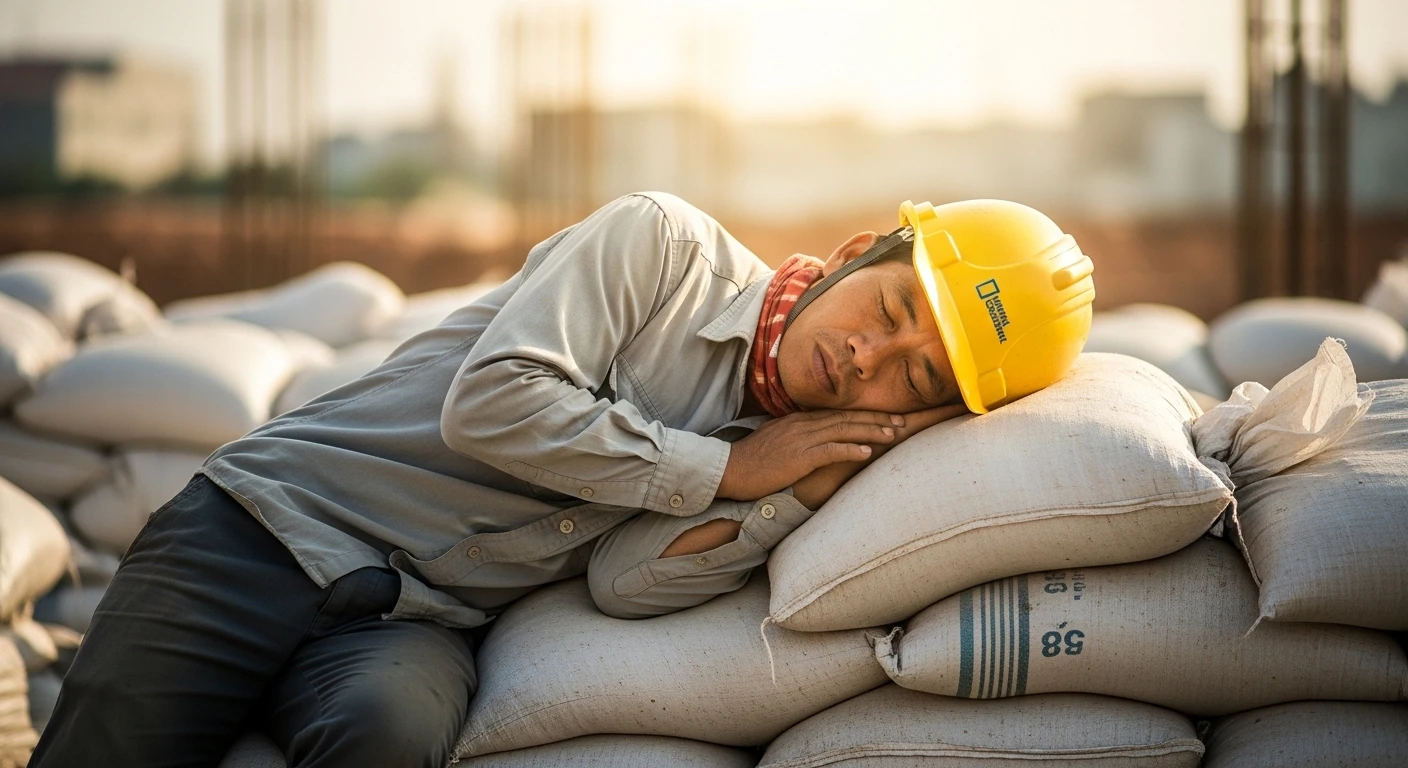
Resourceful rest: a construction site worker taking a well-earned nap amidst the heat of the day.
Beyond the Nap: A Cultural Lens
This tradition speaks volumes about Vietnamese values. It highlights a pragmatic approach to life, a deep respect for the body's needs, and a communal understanding that collective well-being fuels collective success. It's a quiet rebellion against the notion that constant activity equals productivity.
In a society that has historically endured hardship and long working hours, the ‘Ngu Trua’ is a form of self-preservation, a way to ensure sustained effort and resilience. It’s a testament to the idea that sometimes, the most productive thing you can do is nothing at all. It fosters a sense of shared experience; everyone understands the need for this pause, creating a subtle bond among strangers and colleagues alike.
Navigating the 'Quiet Hour' as a Traveler
For visitors, encountering this widespread naptime can be disorienting at first. The sudden quiet can feel eerie, and finding open shops or services might become a challenge. However, understanding ‘Ngu Trua’ transforms this from an inconvenience into a fascinating cultural immersion.
Embrace it. Use this time for your own repose. Find a shaded café that remains open, perhaps one catering to travelers or those who have chosen not to nap. Alternatively, use the quiet hours to visit a temple, stroll through a less crowded park, or simply sit and observe the world’s gentle pause. You'll find that many essential services, like larger restaurants or tourist-oriented businesses, do remain open, albeit with a slightly reduced staff.
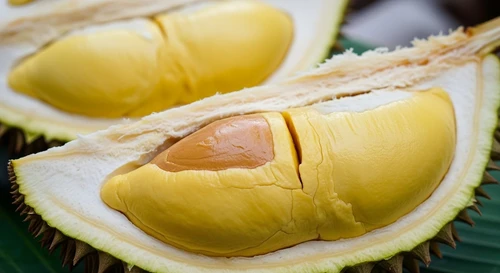
The Stinky Fruit That Divides a Nation: A Beginner's Guide to Durian
Smells like gym socks, tastes like custard. Why is Durian banned in hotels but worshiped in the Mekong Delta? Your ultimate guide to surviving the King of Fruits.
Discover MoreThe 'Ngu Trua' in Action: Anecdotes
I remember my first midday in Vietnam. I was in a small town in the Mekong Delta, looking for a particular tailor. By 1 PM, the street, which had been alive with commerce just an hour before, was utterly deserted. Not a soul in sight. I thought the town had simply closed for the day, a rather extreme measure. Then, peeking into a slightly ajar doorway, I saw the tailor, his wife, and their two children, all fast asleep on simple mats spread across the cool tile floor. They weren't avoiding business; they were honoring the midday ritual.
Another time, visiting a bustling market in Western Vietnam, the energy began to wane as midday approached. Vendors started packing up non-essential items, and a quiet hum replaced the previous din. I watched a woman selling freshly picked fruits from her small boat. As soon as her main sales were done, she unfolded a small tarp, lay down amidst her remaining mangoes and papayas, and drifted off. The unsold fruit, under the watchful gaze of a nearby dozing neighbor, remained safe. It’s a system built on trust and mutual understanding.
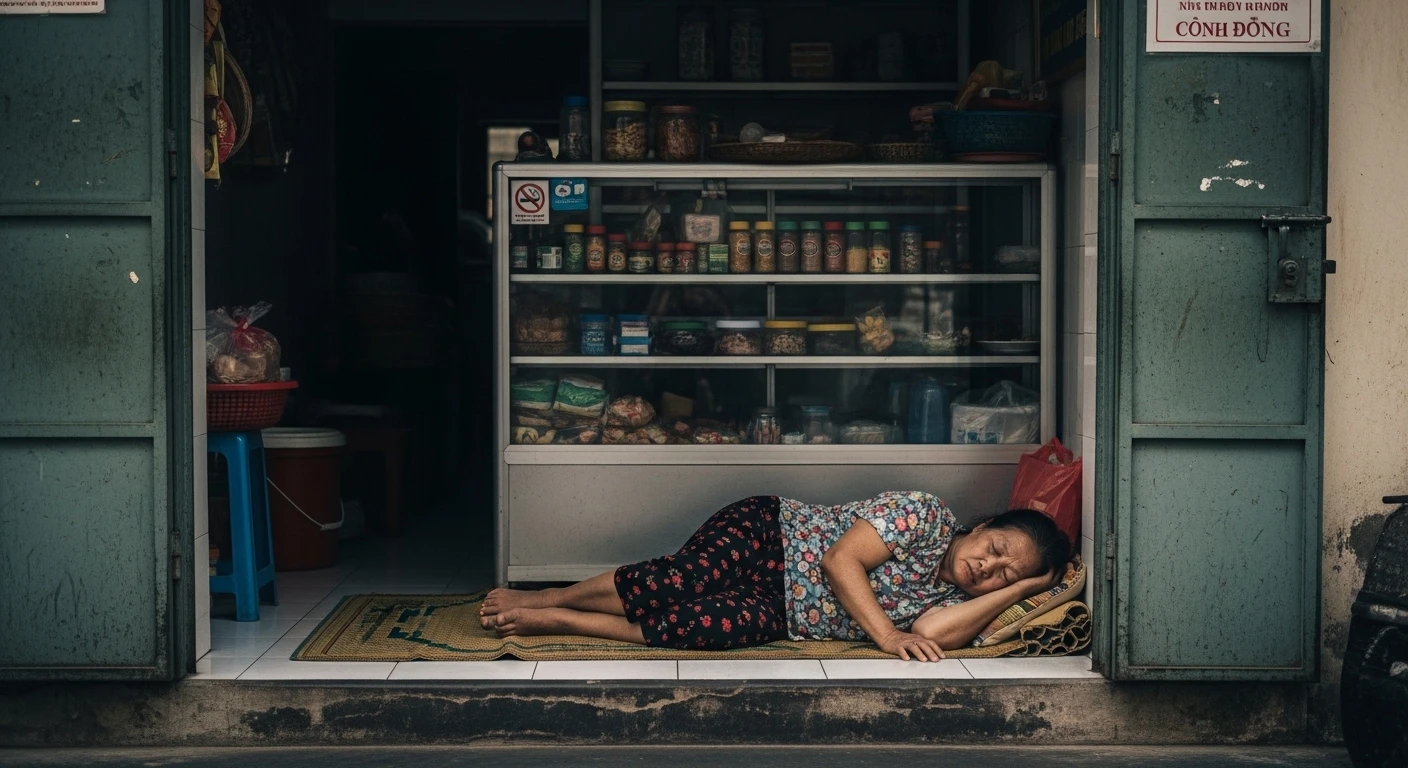
Behind the counter slumber: a common sight during Vietnam's sacred nap time.
The Debate: Tradition vs. Modernity
In the face of globalization and the pressures of a 24/7 economy, the ‘Ngu Trua’ is sometimes questioned. Are there businesses that forgo the nap to capture more customers or meet international business hours? Yes, increasingly, especially in major tourist hubs and international corporations. However, the tradition remains deeply entrenched in the fabric of everyday Vietnamese life.
The debate often centers on efficiency. Some argue that working through the midday heat or finding ways to maintain workflow could boost economic output. Yet, proponents of ‘Ngu Trua’ counter that the increased productivity and reduced burnout from a proper midday rest far outweigh any perceived loss of working hours. It’s a delicate balance, but for now, the siren call of the afternoon nap continues to resonate powerfully across the nation.
The Lasting Legacy of the Siesta
The ‘Ngu Trua’ is more than just a cultural quirk; it's a sustainable practice that reflects a profound understanding of human nature and the environment. It’s a reminder that rest is not idleness, but a vital component of well-being and sustained effort.
For those of us accustomed to the relentless pace of Western work cultures, the Vietnamese midday nap is a potent lesson. It’s an invitation to reconsider our own relationship with rest, to embrace moments of quiet in our busy lives, and perhaps, to find our own ‘Ngu Trua’ – a sacred pause that recharges, rejuvenates, and ultimately, makes us more effective.
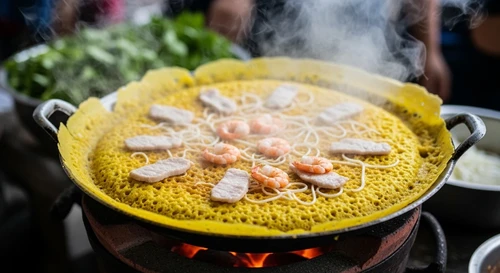
Banh Xeo: The Sizzling Mekong Crepe You Have Been Eating All Wrong
It's loud, it's crispy, and it's massive. Learn the proper, messy, hands-on way to wrap and roll a giant Mekong Delta Banh Xeo in mustard leaves.
Learn to Eat ItFinding Your Own Pause
The ‘Ngu Trua’ is a reminder that life isn’t a race to the finish line, but a journey to be savored. It’s about finding balance, respecting our natural rhythms, and understanding that moments of stillness are just as crucial as moments of action. So, the next time you feel that midday slump, don’t fight it. Listen to your body. Embrace the quiet. Perhaps, even, find your own sacred hour of ‘Ngu Trua’.
Planning Your Trip?
Discover the vibrant life and culture that surrounds these moments of quiet.
🌏 Explore Vietnam's Culture