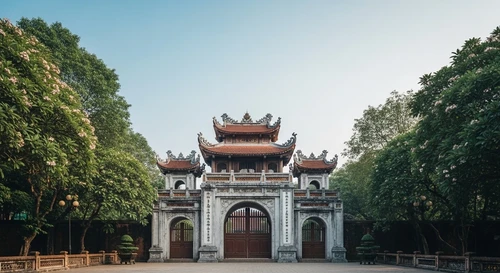
Where Dragons Dance on Water: The Enchantment of Thang Long
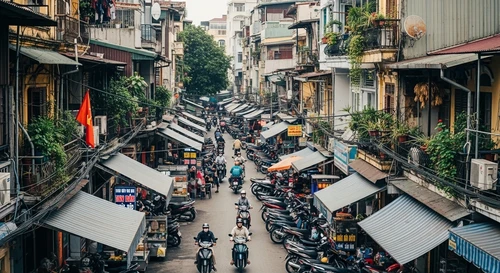
Hanoi’s Old Quarter is a sensory explosion – a maze of narrow streets, vibrant markets, and the ceaseless hum of motorbikes. Amidst this exhilarating chaos, there exists a pocket of serene magic, a stage unlike any other, where ancient tales come alive. We're talking about the Thang Long Water Puppet Theatre, a cultural institution that has captivated audiences for centuries. Step away from the bustling streets and prepare to be mesmerized as wooden figures, guided by unseen hands, frolic and fight on a shimmering expanse of water.
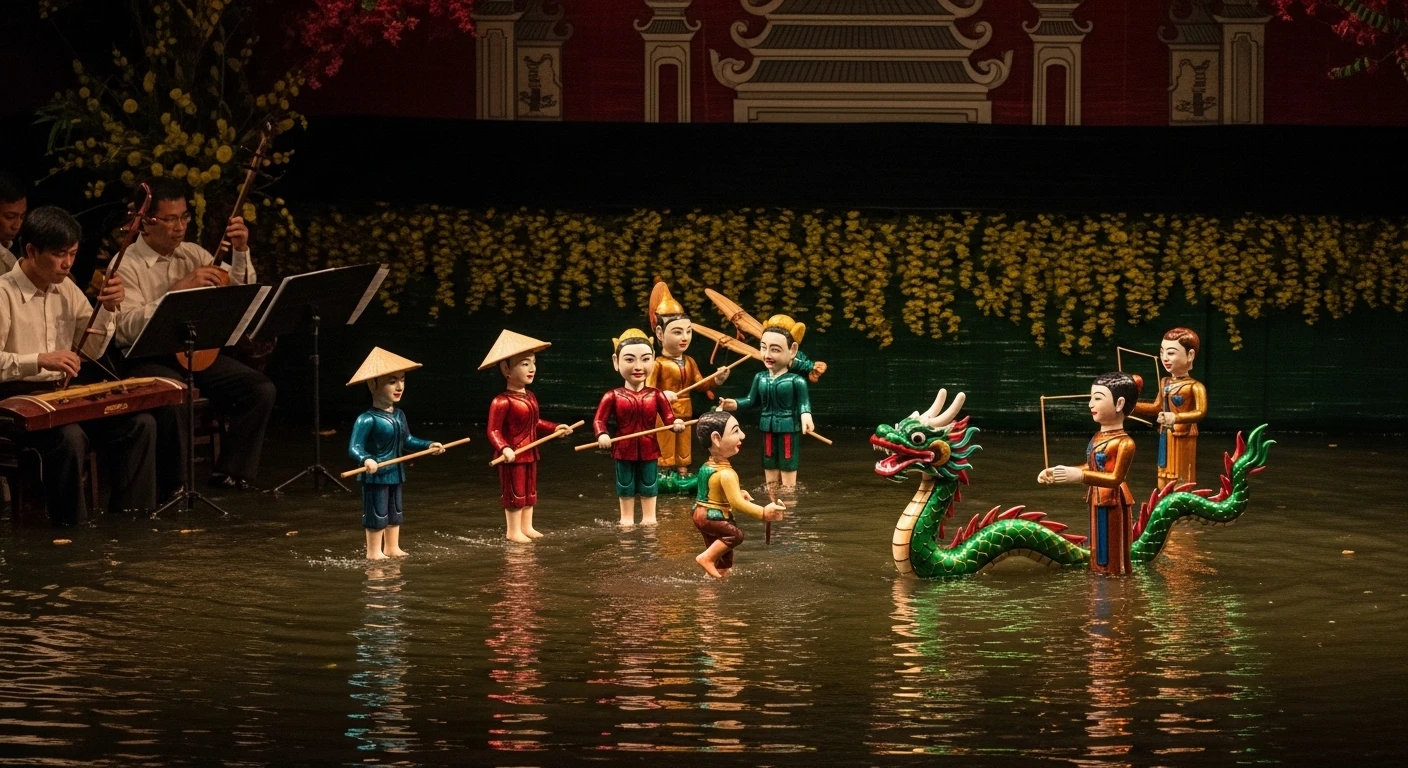
The iconic Thang Long Water Puppet Theatre stage, alive with movement and sound.
This isn't just a show; it's a living piece of Vietnamese history, an art form born from the flooded rice paddies of the Red River Delta. It’s a tradition that speaks of rural life, folklore, and the ingenuity of people who found entertainment and artistic expression in the very landscape that sustained them. And for any traveler seeking the soul of Hanoi, an evening at Thang Long is an absolute, non-negotiable must-do.
A Thousand Years of Water: The Roots of Vietnamese Puppetry
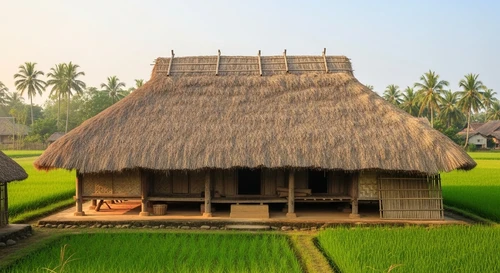
The origins of water puppetry are as fluid and mysterious as the element it inhabits. While precise records are scarce, scholars generally place its emergence in the 11th century, during the Ly Dynasty, in the agricultural heartlands of Northern Vietnam. The region, characterized by its extensive network of rivers and vast, frequently flooded rice paddies, provided the perfect natural amphitheater.
Imagine farmers, their work momentarily halted by the monsoon rains, using the flooded fields as their stage. They carved simple wooden figures, attached them to bamboo poles, and manipulated them from beneath the water's surface, often hidden by reeds or makeshift screens. These early performances were likely simple reenactments of village life, harvest celebrations, and ancient legends. The accompanying music, performed on traditional instruments like the Vietnamese flute (sáo trúc), drums (trống), and xylophone (đàn đá), added a resonant layer to the visual spectacle.
This art form, deeply entwined with the agricultural cycle and the cultural fabric of the Red River Delta, evolved over centuries. It moved from impromptu field performances to more structured stages, though the core elements – water, wooden puppets, and live traditional music – remained constant. The Thang Long Theatre, established in the 1960s, has become the modern custodian of this venerable tradition, adapting it for contemporary audiences while honoring its ancient roots.
From Lacquer and Wood: The Art of the Puppet
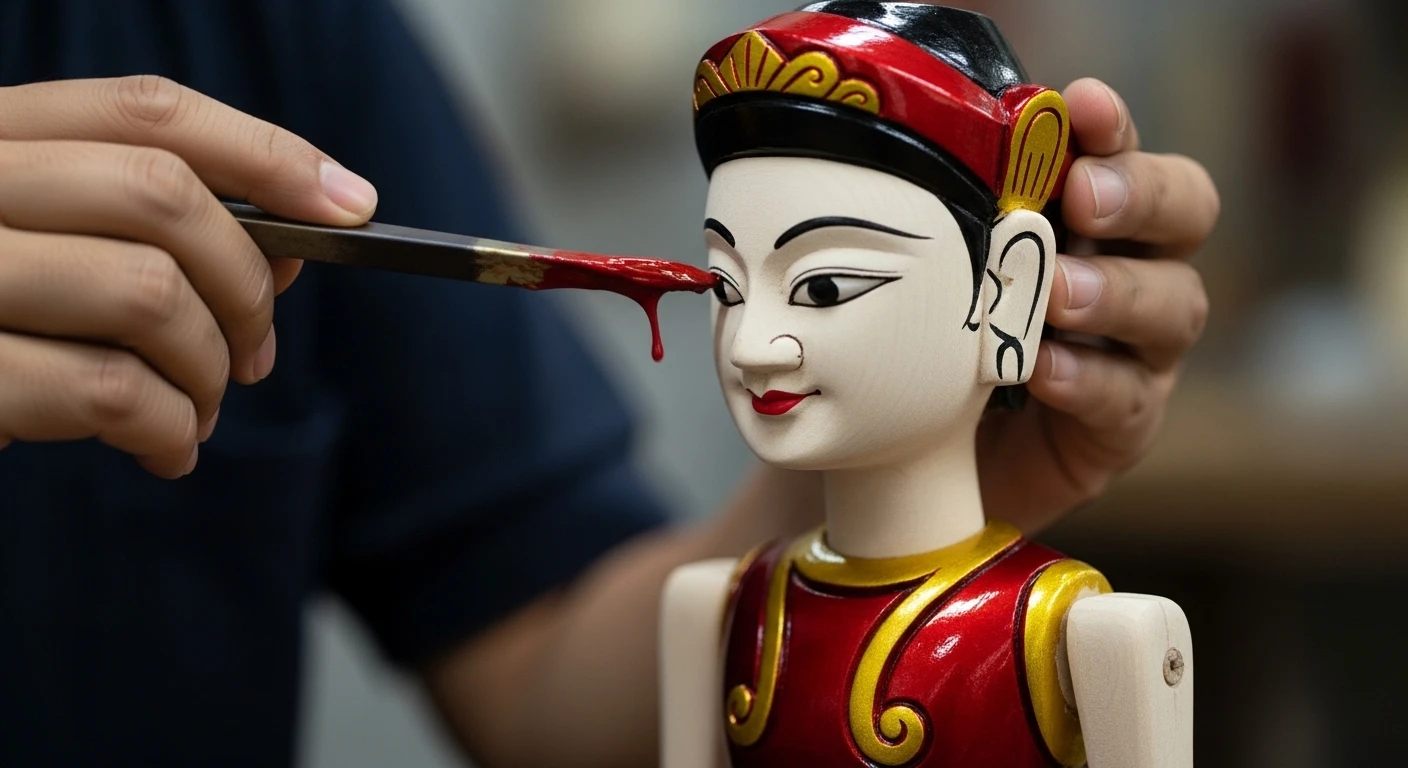
The puppets themselves are miniature masterpieces. Carved from light wood, typically fig tree wood, each character is then lacquered and painted with vibrant colors. The process is meticulous, often taking weeks to complete a single puppet. The artisans meticulously craft not just the human figures – farmers, warriors, emperors, and mythical creatures – but also a menagerie of animals and fantastical beings.
The stage is a visually striking edifice, often designed to resemble a temple or traditional Vietnamese village scene, complete with pagodas and lotus ponds. Behind this facade, submerged in waist-deep water, lies the hidden mechanism. A complex system of rods, strings, and levers allows the puppeteers, hidden from view, to bring these wooden characters to life. They make them leap, swim, fight, and perform a range of actions with surprising agility and grace. Each movement is synchronized to the music, creating a harmonious narrative.
A Symphony on the Water: Stories Unfolding
The performances are typically a series of vignettes, each telling a short story or depicting a scene. You'll witness farmers plowing their fields, fishermen casting their nets, mythical dragons engaging in playful rivalry, and ancient legends brought to vivid life. The narrators, accompanied by the live orchestra, provide context and dialogue, their voices carrying a rhythmic, almost chant-like quality.
The "Water Dragon" plays a prominent role in many performances, symbolizing power, prosperity, and good fortune. Its fluid, serpentine movements are a highlight, as are the depictions of rural Vietnamese life, showcasing the enduring connection to the land. You might see a proud farmer guiding his buffalo, or a lively market scene. The playful antics of the clown-like figures, often designed to elicit laughter, add a lighthearted touch.
While the puppets themselves don't speak, their movements, combined with the evocative music and narration, create a surprisingly rich narrative. It's a testament to the power of visual storytelling and the enduring appeal of traditional folk arts. The simplicity of the medium belies the depth of emotion and cultural resonance it conveys.
Echoes from the Red River: The Live Orchestra
No water puppet show is complete without its musical accompaniment. A live orchestra, typically featuring traditional Vietnamese instruments, provides the heartbeat of the performance. The sounds of the đàn nguyệt (moon-shaped lute), the sáo trúc (bamboo flute), the trống (drums), and cồng chiêng (gongs) weave a tapestry of sound that is both melancholic and uplifting.
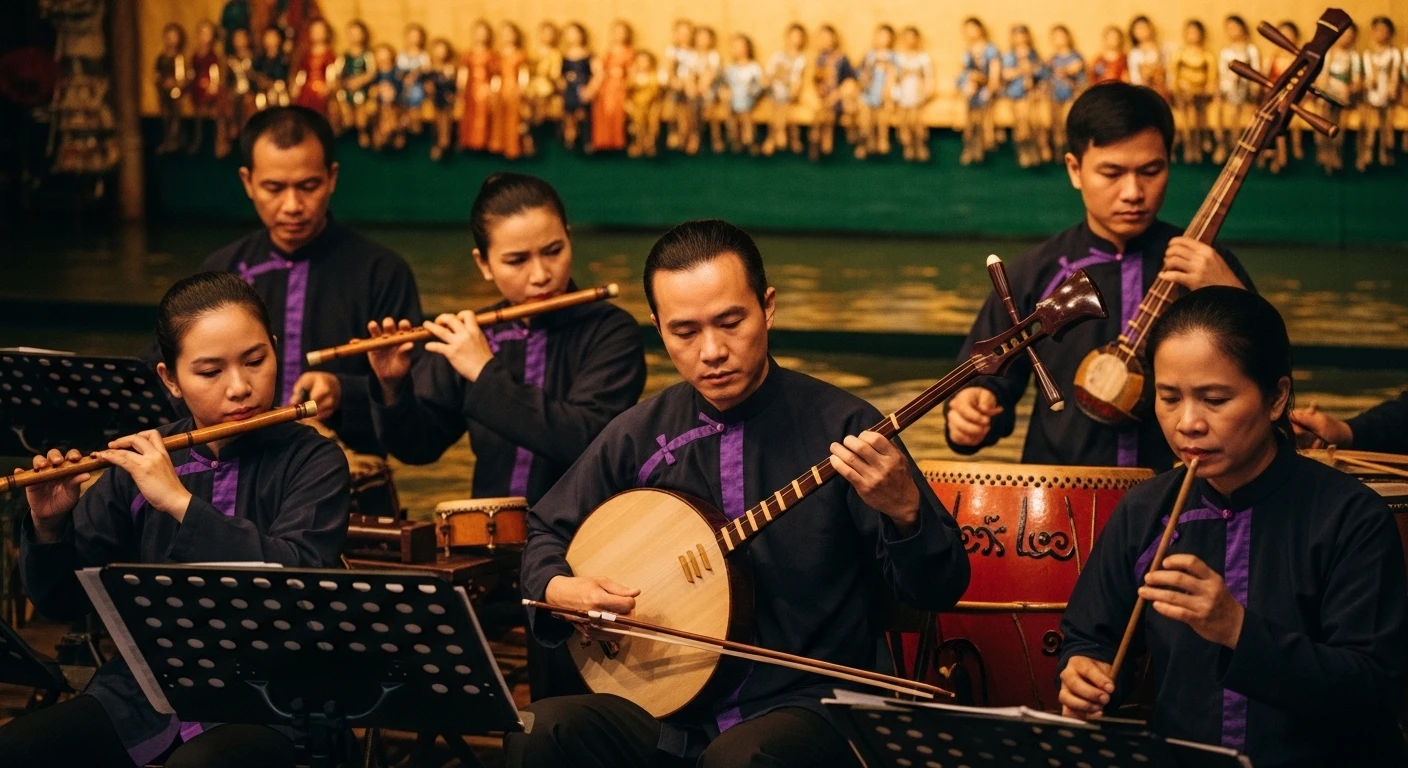
The musicians are positioned to the side or behind the water stage, often visible to the audience. Their playing is not merely decorative; it's integral to the storytelling. The tempo shifts, the melodies swell and recede, perfectly mirroring the action on the water. A jaunty tune might accompany a farmer's work, while a dramatic flourish signals a clash between mythical beasts. This live musical element adds an authentic, visceral energy that recorded soundtracks simply cannot replicate. It’s a soundscape that echoes the rural traditions of the Red River Delta.
Finding Your Way: Thang Long Theatre in Hanoi
The Thang Long Water Puppet Theatre is conveniently located in the heart of Hanoi's Old Quarter, adjacent to the picturesque Hoan Kiem Lake. This central location makes it easily accessible for visitors exploring the capital.
Getting there: If you're staying in the Old Quarter, it's likely within walking distance. Otherwise, taxis and ride-sharing services (like Grab) are readily available and affordable. Simply give the theatre's name or address to your driver.
Tickets: It's highly recommended to book your tickets in advance, especially during peak tourist seasons. You can often purchase them directly at the theatre's box office or through reputable online travel platforms. Shows run multiple times daily, so check the schedule to find a slot that suits you.
Pro Tip: Arrive about 20-30 minutes before the show to secure good seats. While the theatre is not enormous, the front rows offer the best view of the puppet’s intricate details and movements.
Cheers to Tradition: The Bia Hoi Experience
No visit to Hanoi is truly complete without indulging in the city’s famous bia hoi – fresh, locally brewed draft beer. And what better way to cap off a magical evening of water puppetry than by joining the locals at a bia hoi corner?
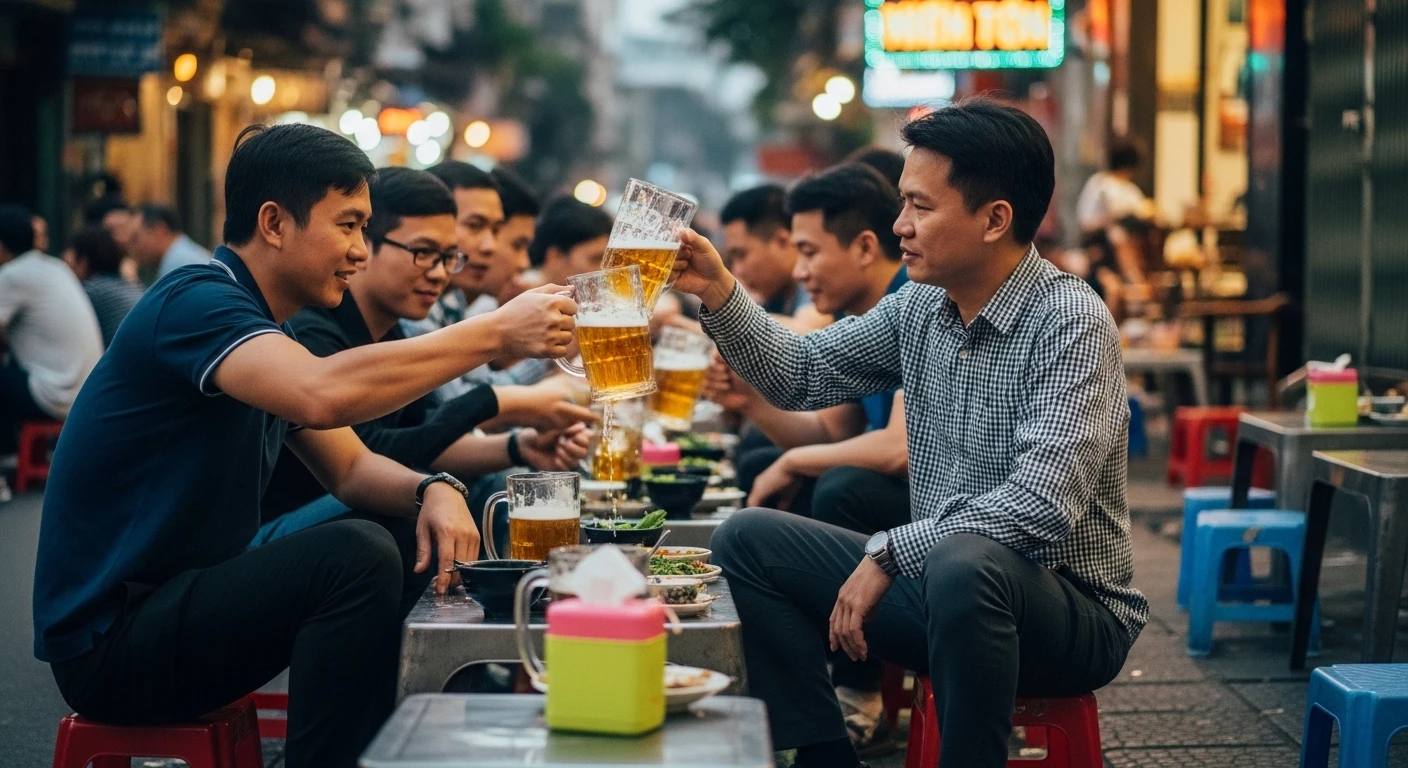
After the curtain falls on the water stage, simply step back out into the bustling streets of the Old Quarter. You'll find numerous small establishments with low plastic stools spilling onto the sidewalks, where the day's freshest batch of bia hoi is tapped. This beer is incredibly light, crisp, and cheap, making it the perfect antidote to Hanoi’s humidity.
Grab a stool, order a glass (or a pitcher!), and soak in the atmosphere. You’ll be rubbing shoulders with Hanoians from all walks of life – students, office workers, old friends catching up. It's a raw, authentic slice of Hanoi life, a communal ritual that embodies the city's vibrant spirit. Pair it with some simple street snacks like grilled skewers or peanuts, and let the day’s adventures sink in.
More Than a Show: A Window into Vietnam's Soul
In a world increasingly dominated by digital entertainment, the enduring charm of Thang Long Water Puppets lies in its tangible artistry and cultural authenticity. It offers a rare glimpse into a tradition that has survived for over a millennium, passed down through generations.
It’s an art form that connects you directly to the history and rural heart of Vietnam. The stories told, the music played, and the very medium of water and wood all speak to a deep cultural heritage. For visitors, it’s an accessible, engaging, and unforgettable way to experience a significant part of Vietnam's identity. It’s an evening that nourishes the soul as much as it delights the senses.
Beyond the Puppets: Explore More of Hanoi's Cultural Gems
Discover the Phung Hung Mural Street: Hanoi's Railway Arches Come AliveThe Enduring Echo of the Water Stage
As the final notes of the orchestra fade and the puppets settle back into their watery world, the magic of Thang Long lingers. It’s a reminder that some of the most profound cultural experiences are found in the simplest, yet most artful, expressions. An evening spent at the Thang Long Water Puppet Theatre isn't just a tourist activity; it's an immersion into the heart of Vietnamese folklore and a delightful prelude to the vibrant social scene of Hanoi's Old Quarter. So, when you find yourself in this captivating city, don't miss the chance to witness this captivating dance on water. It’s a story that deserves to be told, and retold, for generations to come.