The Mekong's Arteries: Beyond the Tourist Trail
The Mekong Delta. A place of emerald rice paddies, shimmering waterways, and a pace of life dictated by the ebb and flow of the river. For many, this land of milk and honey, this lush agricultural heartland of Vietnam, conjures images of vibrant floating markets and the gentle sway of sampans. But venture beyond the well-trodden paths, away from the guided tours, and you’ll find a network of lifeblood far more visceral, far more challenging, and infinitely more revealing of the Delta’s soul: its bridges. Not the modern concrete spans, but the ancient, the humble, the utterly terrifying Cau Khi – the Monkey Bridges.
These are not structures for the faint of heart. Imagine a single, sturdy bamboo log, worn smooth by generations of bare feet, arching precariously over a muddy, churning canal. No railings. No safety net. Just a test of nerve, balance, and an unwavering faith in your own two feet. To cross a Monkey Bridge is to engage with the Mekong Delta in its rawest form, a rite of passage for anyone seeking to understand the ingenuity and resilience of rural Vietnamese life.
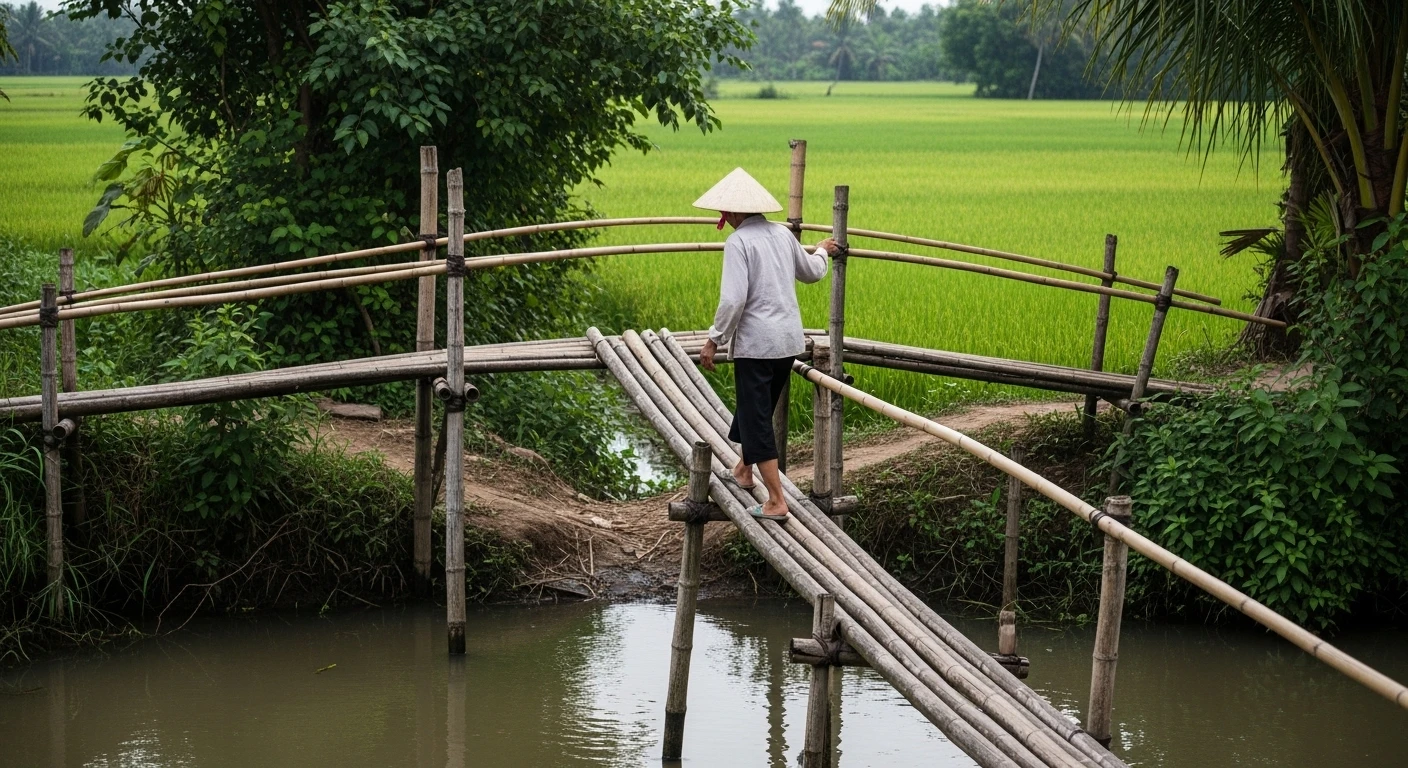
The quintessential Mekong experience: a solitary figure navigating the perilous charm of a bamboo bridge.
The Anatomy of a Challenge: Bamboo, Balance, and Bravery
The term "Monkey Bridge" (Cau Khi) is apt. It conjures images of agile primates, swinging effortlessly from branch to branch. And indeed, crossing these bridges requires a similar dexterity, a primal coordination that we often lose in our concrete jungles. The primary material is bamboo, chosen for its strength, flexibility, and widespread availability in the region. These logs are typically secured firmly at both ends, often anchored into the muddy banks, forming a surprisingly stable, albeit nerve-wracking, pathway.
The width of the log varies, but it’s rarely more than a few inches across. The "deck" can be smooth, or it might have some rudimentary notches carved into it for a sliver of extra grip. The real challenge, however, is the lack of anything to hold onto. This forces you to engage your core, your legs, and your entire sense of equilibrium. The water below, often deep and with a surprisingly strong current, adds a potent psychological element. A slip here isn’t just an embarrassment; it’s a cold, wet, and potentially hazardous plunge.
Where to Find Them: The True Mekong Backroads
You won't find "Monkey Bridge" tours advertised in glossy brochures. These are the everyday arteries of rural life, connecting villages, farms, and local markets across the less-developed parts of the Delta. Provinces like Soc Trang, Bac Lieu, and the more remote areas of Ca Mau are prime hunting grounds. To experience them, you need to get off the main roads.
Accessing the Wild Heart of the Delta:
Your journey will likely begin in Ho Chi Minh City (Saigon), the primary international gateway to Vietnam. From there, you have several options to reach the deeper Mekong:
- Option 1 (Most Direct for Deep Delta): Fly to Can Tho. Vietnam Airlines and other domestic carriers operate flights from Ho Chi Minh City (SGN) to Can Tho (VCA), the Delta's largest city. The flight is about an hour. From Can Tho airport, you can hire a car or taxi to take you towards provinces like Soc Trang or Bac Lieu. This is often the quickest way to start exploring the more remote regions.
- Option 2 (Bus Journey): Bus to Can Tho or Provincial Capitals. Comfortable sleeper buses run regularly from Ho Chi Minh City's Mien Tay bus station to Can Tho, Soc Trang, Bac Lieu, and Ca Mau. The journey can take anywhere from 4 to 7 hours depending on the destination and traffic. Once in these provincial capitals, you'll need to arrange local transport.
- Option 3 (Car/Private Transfer): Rent a Car with Driver. For maximum flexibility and comfort, especially if you want to stop frequently and explore side roads, hiring a car with a driver from Ho Chi Minh City is a viable, albeit more expensive, option. This allows you to specify your route and make spontaneous detours into the countryside.
Once you are in the smaller towns or rural areas of these provinces, the real adventure begins. Ask locals – pointing to a canal and making a balancing gesture can work wonders. You might be directed down narrow paths, past fruit orchards and small homes, until you find yourself facing your first Cau Khi.
The Rural Rhythm: Life on the Water's Edge
The Monkey Bridges are more than just a means of transit; they are an intrinsic part of the Delta’s rural tapestry. They connect homes to rice paddies, gardens to markets, and communities separated by water. Children use them to get to school, farmers to tend their crops, and elders to visit neighbors. They represent an elegant, albeit daring, solution to the geography of the region.
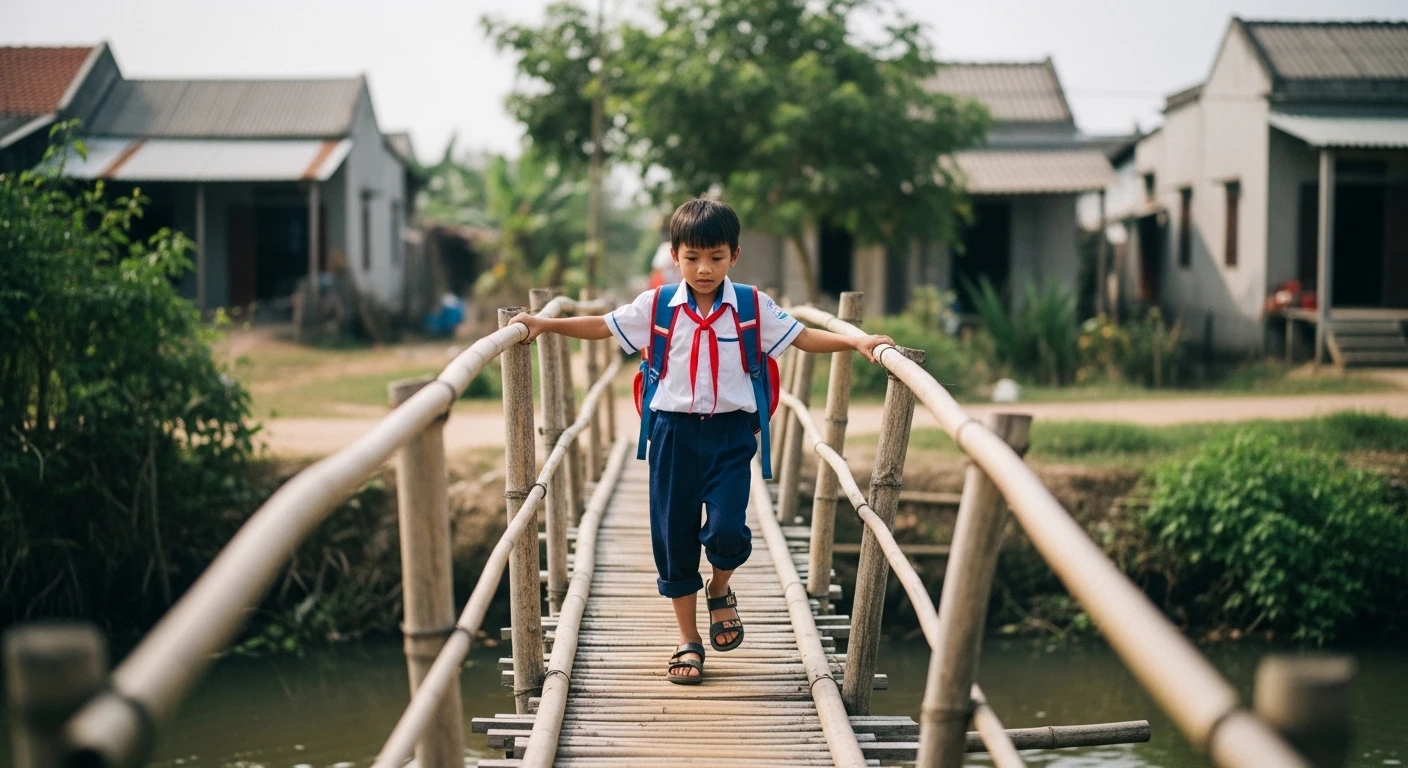
Witnessing daily life unfold on these bridges is captivating. You might see a young student, book bag slung over their shoulder, expertly navigating the log with the ease of a native. Or an elderly woman, carrying a basket of produce, her movements slow but steady. There's a profound sense of community and interdependence fostered by these shared, slightly perilous, pathways. It speaks volumes about the resourcefulness of people who have learned to live in harmony with their watery environment.
More Than Just a Bridge: Cultural Significance
The Cau Khi are a symbol of the Mekong Delta's spirit: resilient, adaptable, and deeply connected to nature. They embody a practical approach to problem-solving, utilizing readily available resources to overcome geographical challenges. In a region where water is life, these bridges are functional art, born out of necessity and refined by generations of use.
For travelers, encountering these bridges is a moment of authentic discovery. It’s a chance to step away from the sanitized tourist experience and engage with the genuine rhythm of local life. It's also an opportunity to reflect on our own relationship with technology and infrastructure. In a world obsessed with speed and convenience, the Cau Khi remind us of simpler, more elemental ways of moving through the world, demanding focus, presence, and a healthy respect for the environment.
Understanding the local life in the Mekong extends beyond its infrastructure. For a deeper dive into authentic experiences, consider immersing yourself in the Delta's culture by reading about why staying with a Mekong family changes everything.
The Thrill-Seeker's Challenge: Conquering the Cau Khi
So, you’ve found yourself standing before a Cau Khi. What now? The first rule: don't rush. Take a moment to observe. Watch how the locals cross – their gait, their balance, how they use their arms for counter-balance.
Tips for Crossing:
- Lighten Your Load: If possible, leave your backpack or heavy bags on the other side or with a trusted local.
- Focus Ahead: Stare at your destination, not down at the water. Keep your gaze steady.
- Engage Your Core: Stand tall, tighten your abdominal muscles, and maintain a stable posture.
- Embrace the Wobble: The log *will* move slightly. Don't fight it; learn to adjust your balance subtly.
- Arms Out: Extend your arms to the sides for better balance, like a tightrope walker.
- Slow and Steady: Take deliberate, measured steps.
- Barefoot is Best: If you're wearing shoes that might slip, consider taking them off. Your bare feet will offer better grip.
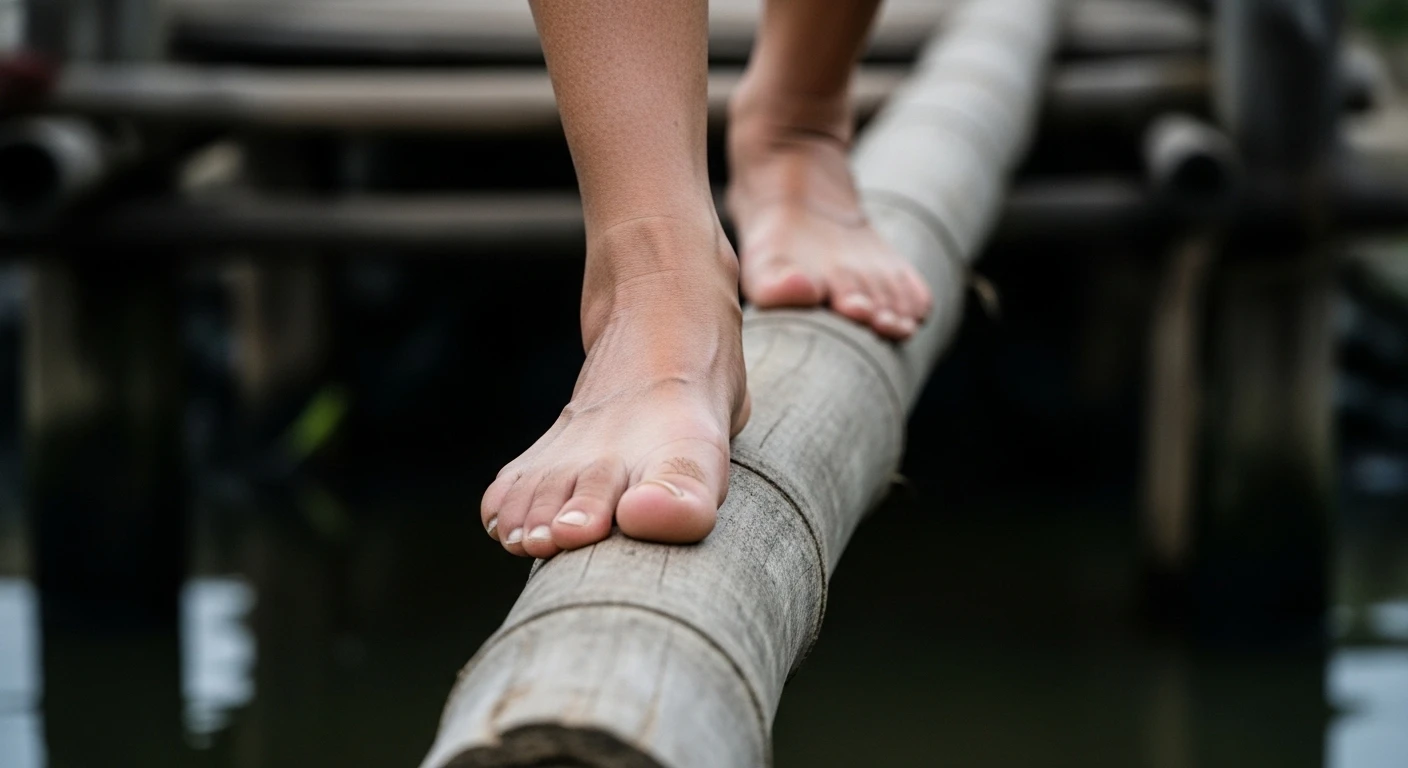
It’s a sensation unlike any other – the slight give of the bamboo, the feeling of the rough wood underfoot, and the exhilarating sense of accomplishment upon reaching the other side. It’s a small victory, but one that feels monumental.
For those who find the culinary side of Vietnam just as thrilling as the adventure, don't miss out on the crispy, savory delight of Banh Xeo. Learn how to truly enjoy this Mekong specialty at "Banh Xeo: The Sizzling Mekong Crepe You Have Been Eating All Wrong."
The Modern Conundrum: Progress and Preservation
As the Mekong Delta modernizes, the traditional Cau Khi are slowly giving way to sturdier, more accessible concrete or steel bridges, and paved roads are reaching further into the countryside. While this signifies progress and improved safety, it also marks the gradual disappearance of a unique cultural artifact.
The iconic image of the single bamboo log over the water is becoming rarer, confined to the most remote villages or areas where modernization has yet to arrive. For photographers, travelers, and cultural enthusiasts, this makes seeking out these bridges an even more urgent mission. It’s a race against time to document and experience a tradition that, while potentially dangerous, holds immense cultural and historical significance.
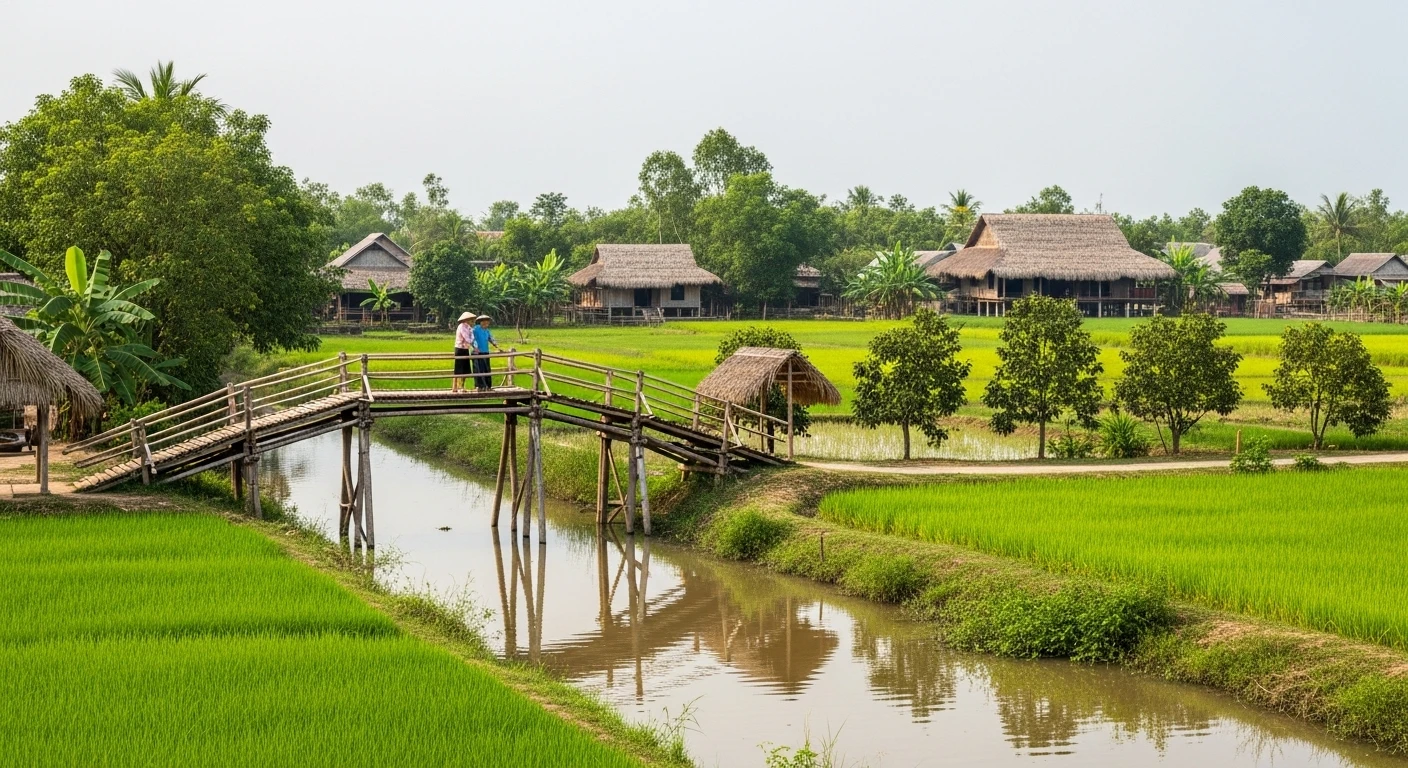
Echoes of a Floating World
The Monkey Bridges are a poignant reminder of a time when life on the Mekong was defined by its waterways. They are the unsung heroes of the Delta's intricate transport system, a testament to human adaptability and ingenuity. While modern infrastructure continues to advance, the spirit of the Cau Khi – the courage, the balance, the connection to the elements – remains deeply ingrained in the fabric of this enchanting region.
For those willing to venture off the beaten path, to embrace a little risk for a lot of reward, the Monkey Bridges offer an unforgettable encounter with the soul of the Mekong Delta. They are not just crossings; they are experiences that test your mettle and leave you with a profound appreciation for the enduring spirit of rural Vietnam.
The Legacy of Ingenuity
The next time you find yourself in the Mekong Delta, dare to seek out these humble bamboo crossings. It's a chance to walk in the footsteps of generations, to feel the pulse of the river beneath your feet, and to experience a side of Vietnam that is both challenging and deeply rewarding. The Cau Khi are more than just bridges; they are a living legacy of a culture forged by water, resilience, and an unyielding will to connect.

Written by
Hoang Nguyen
Travel Correspondent & Photo Editor
Published
March 14, 2026
Updated
March 15, 2026
Reports from the road with a focus on landscapes, local life, and visual atmosphere.
Explore More of the Mekong
View more Travel & Culture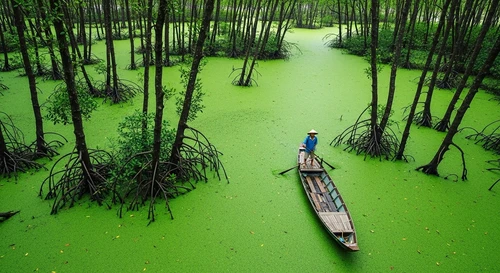
Tra Su Mangrove Forest: The Mekong's Emerald Green Fairy Tale
Glide silently on a rowboat through a flooded forest blanketed entirely in bright green duckweed. Tra Su is the most surreal ecosystem in the Mekong Delta.
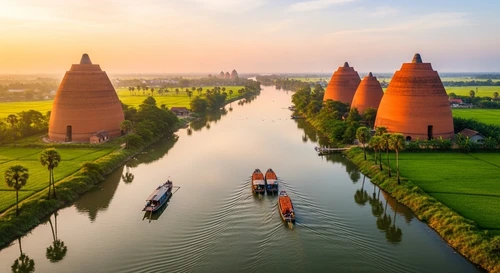
Vinh Long Clay Kingdom: Cai Be Market and Brick Kilns
Cruise the quiet waters of Cai Be, then sail past the massive, red terracotta brick kilns that look like ancient pyramids lining the Co Chien river.
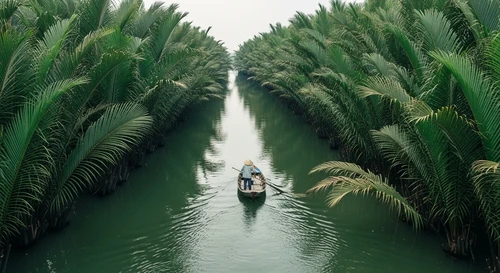
Ben Tre Coconut Kingdom: Sampan Boats and Elephant Ear Fish
Glide quietly on a wooden sampan through narrow, palm-fringed canals. Visit a coconut candy workshop and feast on a massive, deep-fried Elephant Ear fish wrapped in rice paper.
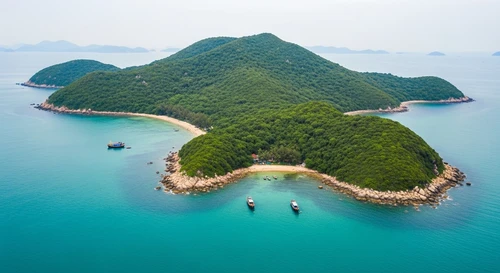
Cu Lao Xanh: Quy Nhon's Untouched 'Green Island'
Skip the crowded beaches. Take a wooden ferry to this remote island, climb the century-old lighthouse, and eat cheap, freshly caught squid with the welcoming locals.
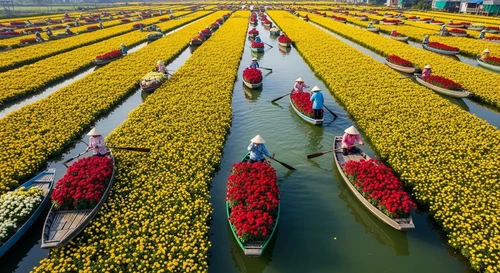
Dong Thap Wetlands: Sa Dec Flowers and Grilled Field Rat
Wander through the massive floating flower villages of Sa Dec. If you are brave, end the day in a local pub eating the Delta's juiciest delicacy: free-range field rat.
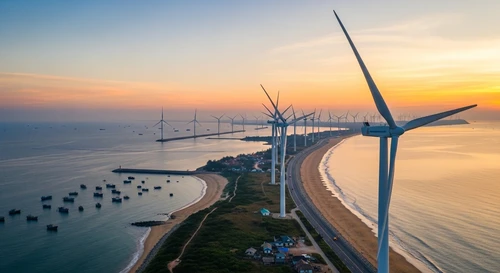
Bac Lieu Off-Grid: Wind Farms and Spicy Pancakes
Walk along the coast under massive wind turbines. Visit the opulent mansion of the legendary 'Prince of Bac Lieu' and eat the heavily spiced, local Banh Xeo.
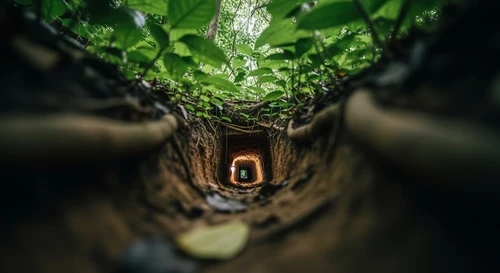
Cu Chi Tunnels: Crawling, Shooting, and Tapioca
A sobering half-day trip. Crawl through claustrophobic guerrilla tunnels, fire an AK-47 at the range, and eat boiled tapioca dipped in peanut salt—the diet of the Viet Cong.
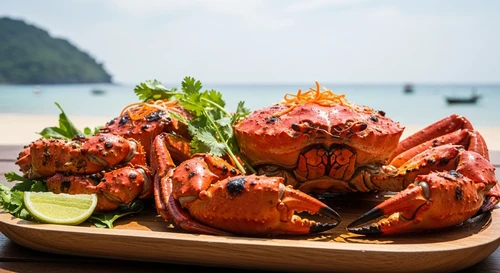
Phu Quy Island: Infinity Pools, Wind Turbines, and King Crab
Vietnam's trendiest remote island. Hike to the natural rock infinity pool, take photos under massive wind turbines, and feast on the shockingly red, spiky King Crab.
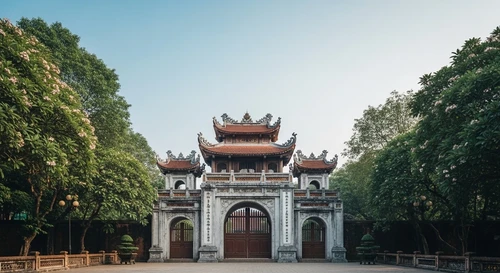
Temple of Literature: Exploring Vietnam's First National University
Stroll through centuries-old courtyards, touch the stone turtles for good luck, and discover the deep Confucian roots of Vietnamese education. Perfect for a quiet afternoon walk.
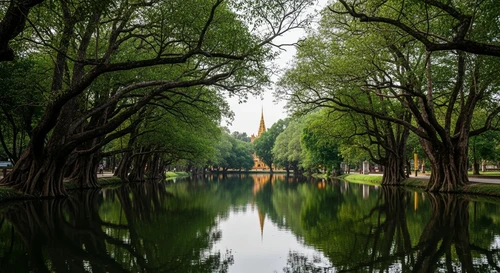
Tra Vinh Tranquility: Khmer Temples and Bun Suong
Vietnam's quietest province. Cycle under the canopy of ancient trees around Ba Om Pond, visit the golden Ang Pagoda, and eat the bizarre shrimp-sausage noodle soup.
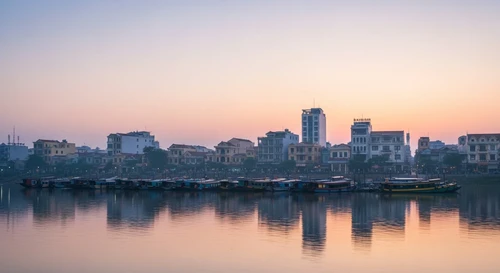
Chau Doc Border Town: Tra Su Forest and Ba Chua Xu
Where Vietnam meets Cambodia. Row through the violently green duckweed of Tra Su cajuput forest, visit floating fish farms, and witness the intense pilgrimages at Sam Mountain.
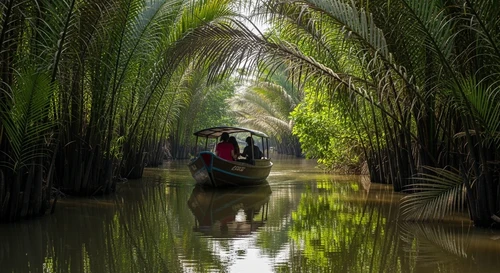
Tien Giang: Thoi Son Island and My Tho Noodle Soup
Listen to traditional 'Don Ca Tai Tu' folk music while eating tropical fruit on Thoi Son island. Don't leave without slurping a bowl of chewy, garlicky Hu Tieu My Tho.