More Than Just a Drink: The Soul of 'Nhau'
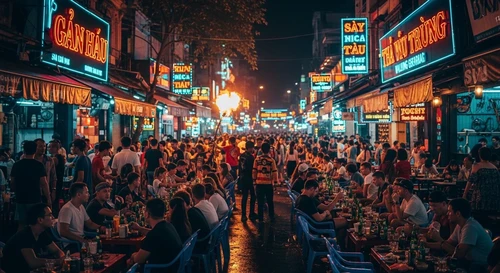
Step onto any bustling street in Can Tho, the Mekong Delta's capital, as dusk begins to settle, and you'll hear it. The clamor of voices, the clinking of glasses, the sizzle of something delicious hitting a hot pan. This is the sound of 'Nhau' (pronounced 'yow'), a word that transcends simple drinking and embodies a fundamental pillar of Vietnamese social culture. It's not merely about consuming alcohol; it's about forging bonds, closing deals, celebrating wins, and weathering life's storms, all under the convivial glow of a shared meal and ample beer.
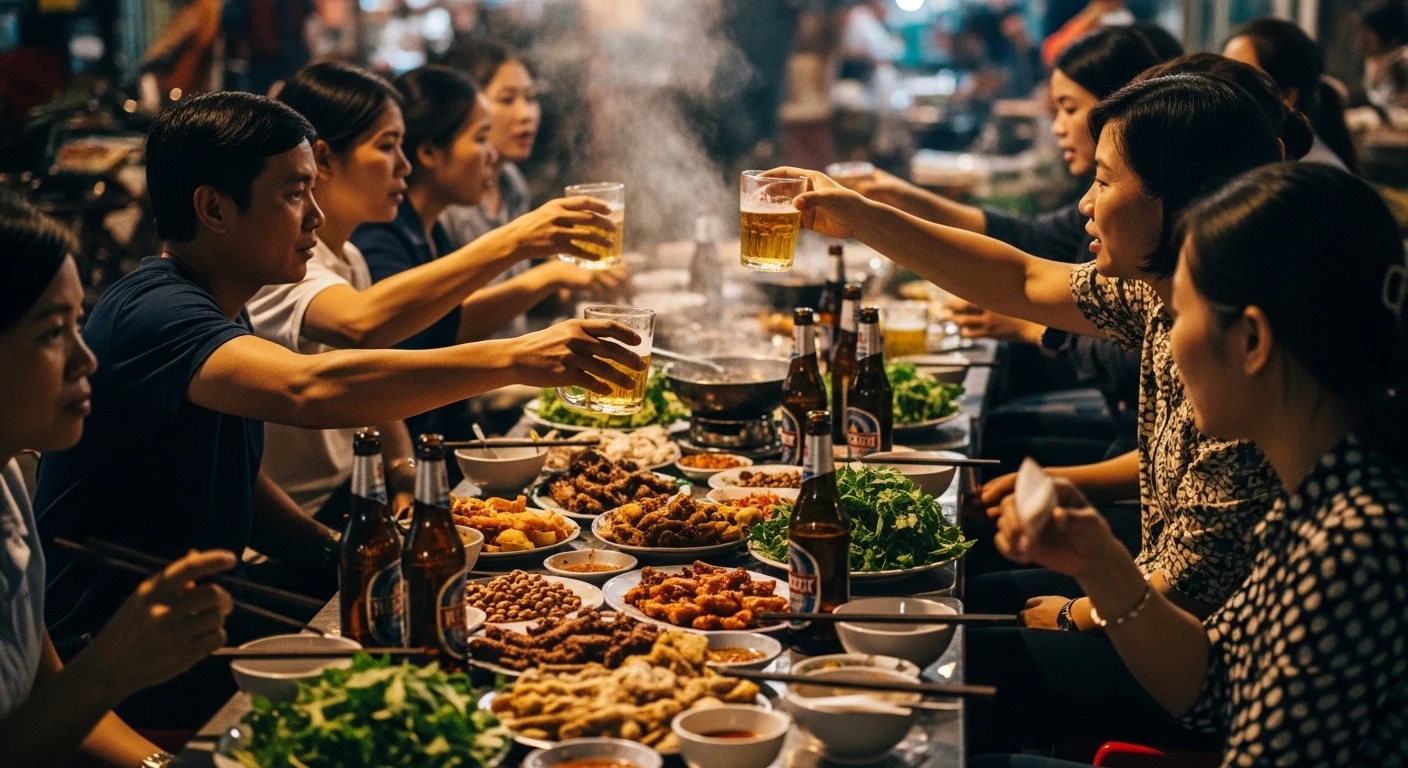
The vibrant pulse of 'Nhau' spills onto the streets of the Mekong Delta, a testament to community and connection.
For a Westerner accustomed to a more reserved approach to dining and drinking, 'Nhau' can seem a little overwhelming, perhaps even chaotic. But peel back the layers, and you'll discover a profound system of hospitality, respect, and shared experience that fuels everything from casual friendships to high-stakes business negotiations.
The Sacred Chant: "Mot, Hai, Ba, Dzo!"
The ritual begins with the toast. In Vietnam, it's rarely a polite "cheers." It's a declaration, a rallying cry: "Mot, Hai, Ba, Dzo!" (One, Two, Three, Drink!). This energetic countdown, often followed by a collective gulp of beer or a potent shot of 'ruou' (rice wine), is the universal signal that camaraderie is about to commence. The person initiating the toast is often the host or the senior figure, setting a tone of generosity and inclusivity.
The etiquette is simple, yet vital: you don't drink alone. If someone offers you a drink, you accept. If you are drinking with others, you reciprocate the toast. Eye contact is important; never let your glass be filled without acknowledging the person doing the pouring. It's a dance of mutual respect, performed with a smile and often a laugh. In the Mekong, this ritual feels particularly genuine, a direct expression of the region's warm and welcoming spirit.
The Unwritten Menu: Bizarre and Brilliant Bar Snacks
A 'Nhau' session is defined not just by the drinks, but by the sheer, glorious variety of food that accompanies them. Forget dainty appetizers. Vietnamese bar snacks, or 'mồi nhắm,' are designed to complement strong drinks, stimulate conversation, and, frankly, absorb copious amounts of alcohol. The stranger, the better, for many locals.
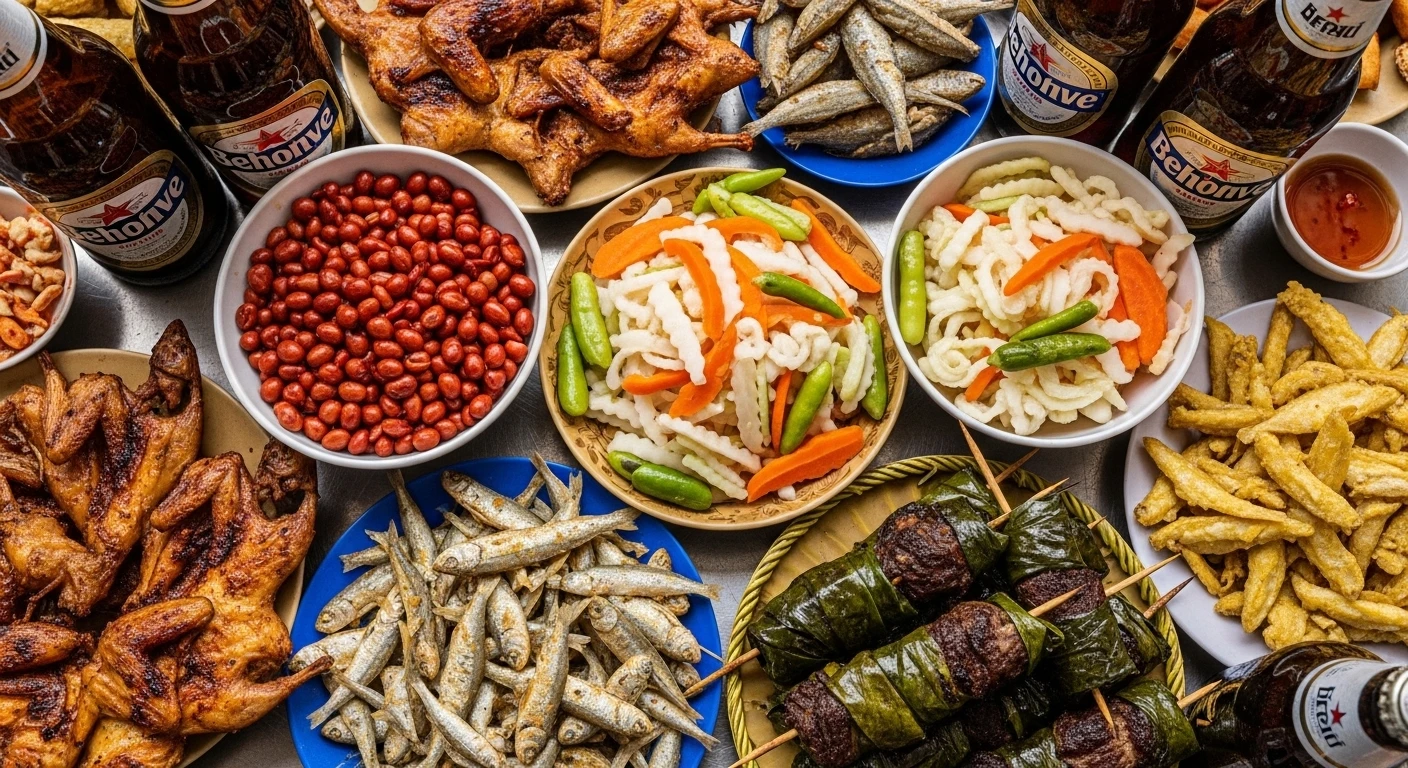
A typical 'Nhau' table in the Mekong Delta, a vibrant display of local flavors.
In a Mekong Delta 'quan nhau' (drinking establishment), you might encounter dishes like:
- Grilled Quail (Chim Cút Nướng): Often marinated in lemongrass and chili, these small, flavorful birds are a classic.
- Spicy Peanuts (Đậu Phộng Rang Muối): Simple, addictive, and always present.
- Pickled Vegetables (Dưa Món): A refreshing, palate-cleansing counterpoint to rich and fried foods.
- Salty Fried Small Fish (Cá Sặc Chiên Giòn): Tiny, crispy fish, eaten whole – bones and all.
- Beef Wrapped in Betel Leaves (Bò Lá Lốt): Grilled to perfection, releasing an incredible aroma.
- Sea Urchin (Nhím Biển): Served raw or grilled with a topping of scallion oil – an acquired taste, perhaps, but highly prized.
- Frog Legs (Đùi Ếch): Fried with lemongrass or cooked in a spicy broth, they're a delicacy in many rural areas.
The beauty of 'Nhau' food is its sheer diversity and its deep connection to local ingredients. In the Mekong Delta, expect a heavy emphasis on fresh river fish, local produce, and bold, often spicy, flavors.
The Business of Beer Streets: Where Deals Are Done
It's a truth universally acknowledged in Vietnam: major business decisions are rarely sealed in sterile boardrooms. They are cemented over a few beers, amidst the clatter and convivial chaos of a 'bia hoi' (fresh beer) spot or a dedicated 'beer street.'
Why? Because 'Nhau' strips away formality. It creates an environment of shared vulnerability and camaraderie. When you've shared a meal, toasted each other, and laughed at questionable jokes, barriers crumble. Trust is built, not through PowerPoint presentations, but through shared experience. In the Mekong Delta, this often plays out in open-air eateries or along riverside promenades, where the gentle breeze and the sounds of local life provide a relaxed backdrop for crucial discussions.
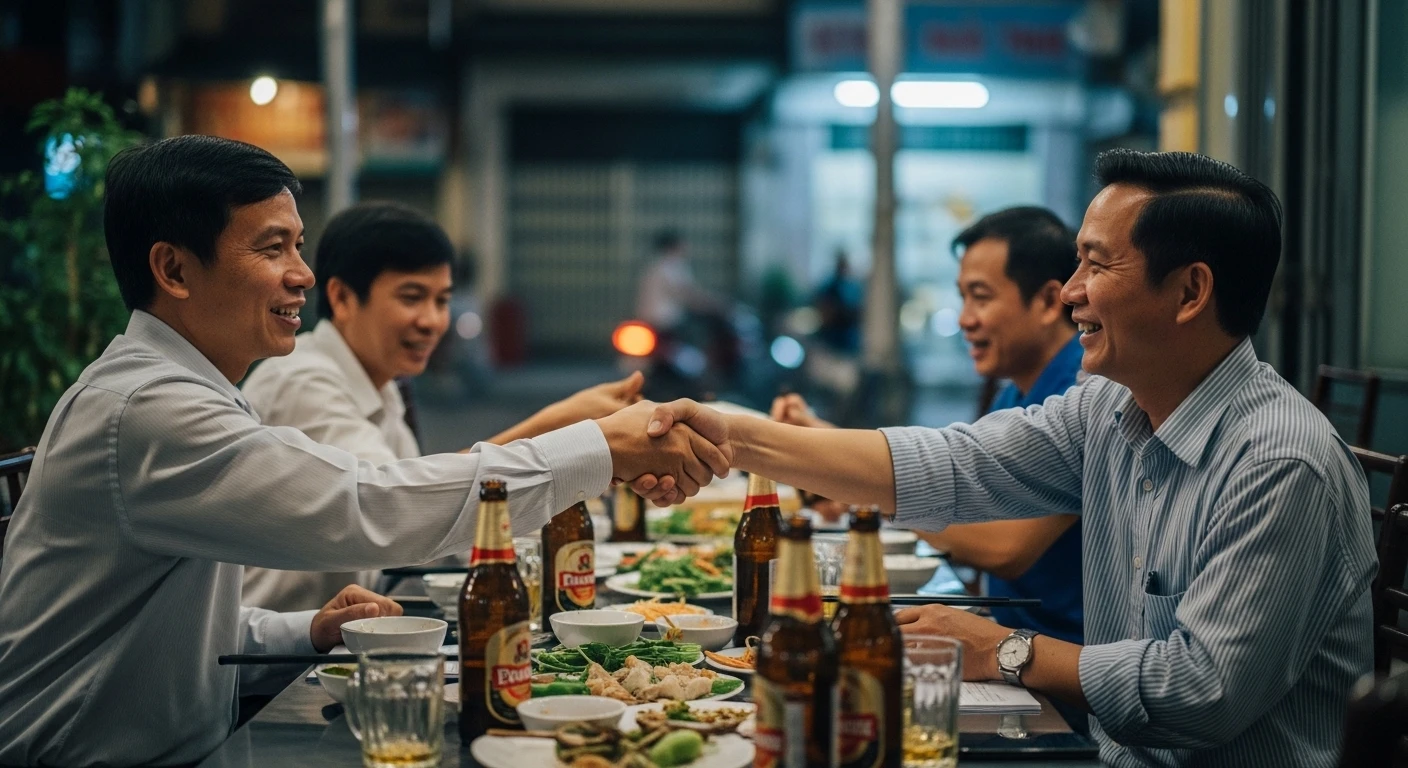
The handshake that seals a deal, often sealed with a shared drink.
Whether it's a contractor negotiating a new project in Can Tho, a farmer discussing crop prices, or a small business owner solidifying a partnership, the beer street is the de facto meeting ground. The informal setting encourages honesty and directness, making it an incredibly effective, albeit unconventional, business strategy.
Beyond the City: 'Nhau' in Rural Vietnam
While the image of bustling city beer streets is common, 'Nhau' is arguably even more vital in the rural Mekong Delta. Here, life can be physically demanding, and social connections are the lifeblood of the community.
After a long day tending to rice paddies or fishing in the canals, men (and increasingly, women) gather at local eateries or simply at someone's home. The food might be simpler – perhaps grilled fish caught that morning, fresh vegetables from the garden, and a potent batch of homemade 'ruou' – but the spirit of 'Nhau' remains the same. It's about sharing the day's joys and struggles, offering support, and reinforcing the bonds that hold these close-knit communities together. The laughter that echoes through these gatherings is as much a part of the landscape as the emerald green rice fields.
These rural 'Nhau' sessions are often characterized by deep personal storytelling and a genuine sense of belonging. It's a reminder that amidst the modernization, the core of Vietnamese culture lies in human connection.
Navigating the 'Nhau' Scene as a Visitor
If you find yourself invited to a 'Nhau' session in the Mekong Delta, consider it a genuine honor. It's an invitation into the heart of local culture. Here are a few tips to help you navigate the experience with grace:
- Accept Every Toast (Within Reason): If you're not a heavy drinker, politely signal your limits early on. But for the initial rounds, embrace the spirit. If you can't finish a glass, a common practice is to leave a small amount, or reciprocate with a smaller pour.
- Don't Be Shy with Food: Always partake in the food. It's as important as the drink. Pointing to dishes you'd like to try is perfectly acceptable.
- Embrace the Noise: 'Nhau' can be loud. Don't be afraid to raise your voice slightly in conversation, but also appreciate the cacophony; it's part of the energy.
- Learn a Few Phrases: "Mot, Hai, Ba, Dzo!" is essential. "Cam on" (thank you) and "Ngon qua!" (very delicious) will go a long way.
- Let the Host Lead: Generally, allow the host to guide the flow of the evening.
- Go with the Flow: The most important rule is to relax, be open, and enjoy the company. 'Nhau' is about connection, not perfection.
The Rise of Modern 'Nhau'
While the core principles of 'Nhau' remain steadfast, modern Vietnam has seen an evolution. Alongside traditional beer gardens and family homes, trendy gastropubs and themed bars are now offering sophisticated 'Nhau' experiences. These often feature craft beers, curated wine lists, and fusion snacks.
However, the soul of 'Nhau' is best experienced in its more traditional settings, particularly in the Mekong Delta. Here, the focus remains on authenticity, community, and the simple pleasure of sharing good food and drink with good company. Whether it’s a humble roadside eatery or a family gathering, the essence of 'Nhau' endures.
Did you know that the Vietnamese coffee culture also has its own unique social rituals? While different from Nhau, it represents another crucial aspect of social interaction through food and drink.
The Mekong's Embrace: 'Nhau' and Local Life
In the Mekong Delta, 'Nhau' is not an occasional event; it's woven into the fabric of daily life. The region's abundance of fresh produce and seafood makes it a natural playground for communal feasting. Think of riverside restaurants where the catch of the day is grilled over open flames, or the lively atmosphere of floating markets that transition into impromptu drinking sessions as the day winds down.
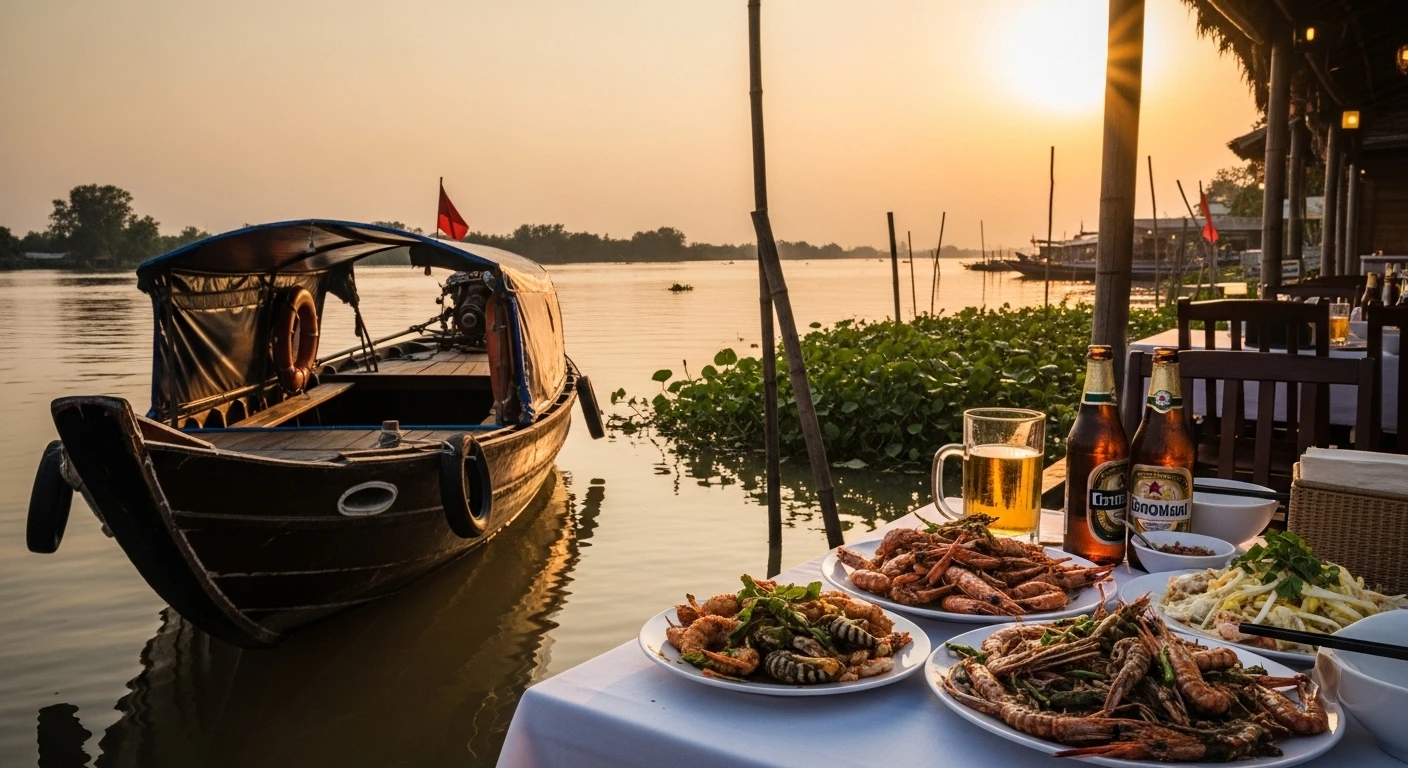
Riverside dining is an integral part of the Mekong's 'Nhau' experience, offering fresh ingredients and a relaxed ambiance.
The proximity to ingredients means that 'Nhau' food in the Delta is often dictated by what's freshest. This could mean platters of succulent grilled prawns, steamed local fish with herbs, or spicy stir-fries featuring river crabs. The beer, typically a light lager like Tiger or Saigon Beer, is always served ice-cold, often with buckets of ice for those who prefer their drinks extra chilled, a common practice in the tropical heat. The tradition of drinking beer with ice is perfectly suited to the 'Nhau' ritual.
For the traveler, experiencing 'Nhau' in the Mekong Delta offers an unfiltered glimpse into the local soul. It's an opportunity to connect with people on their terms, share in their celebrations, and understand that in Vietnam, a shared meal and a cold beer are the universal language of friendship and connection.
The Enduring Power of 'Mot, Hai, Ba, Dzo!'
More than just a drinking game, 'Nhau' is a cultural institution. It’s the place where stories are told, advice is given, laughter is shared, and life's important decisions are made. In the vibrant tapestry of Vietnamese life, especially in the warm embrace of the Mekong Delta, 'Nhau' is the thread that binds people together, one clinking glass and one delicious bite at a time. So next time you're in Vietnam, don't just go for a drink – go for a 'Nhau'. You might just find the truest heart of the nation.

Discover Another Facet of Vietnamese Culture
While Nhau is about robust flavors, Vietnam's Buddhist traditions have also shaped a unique culinary landscape.
Read: Vegetarian Heaven: How Buddhism Shaped Vietnam's Fake Meat Industry