The Dragon's Ascent: A Journey to Hang Mua Peak
In the heart of Vietnam's Red River Delta, cradled by the emerald embrace of Ninh Binh province, lies a peak that demands an offering: a climb. Not just any climb, mind you, but an ascent up 500 stone steps, each one a testament to the enduring spirit of those who seek breathtaking vistas. This is Hang Mua Peak, a place where nature and myth entwine, crowned by a stone dragon that surveys its kingdom of karst landscapes and winding waterways.
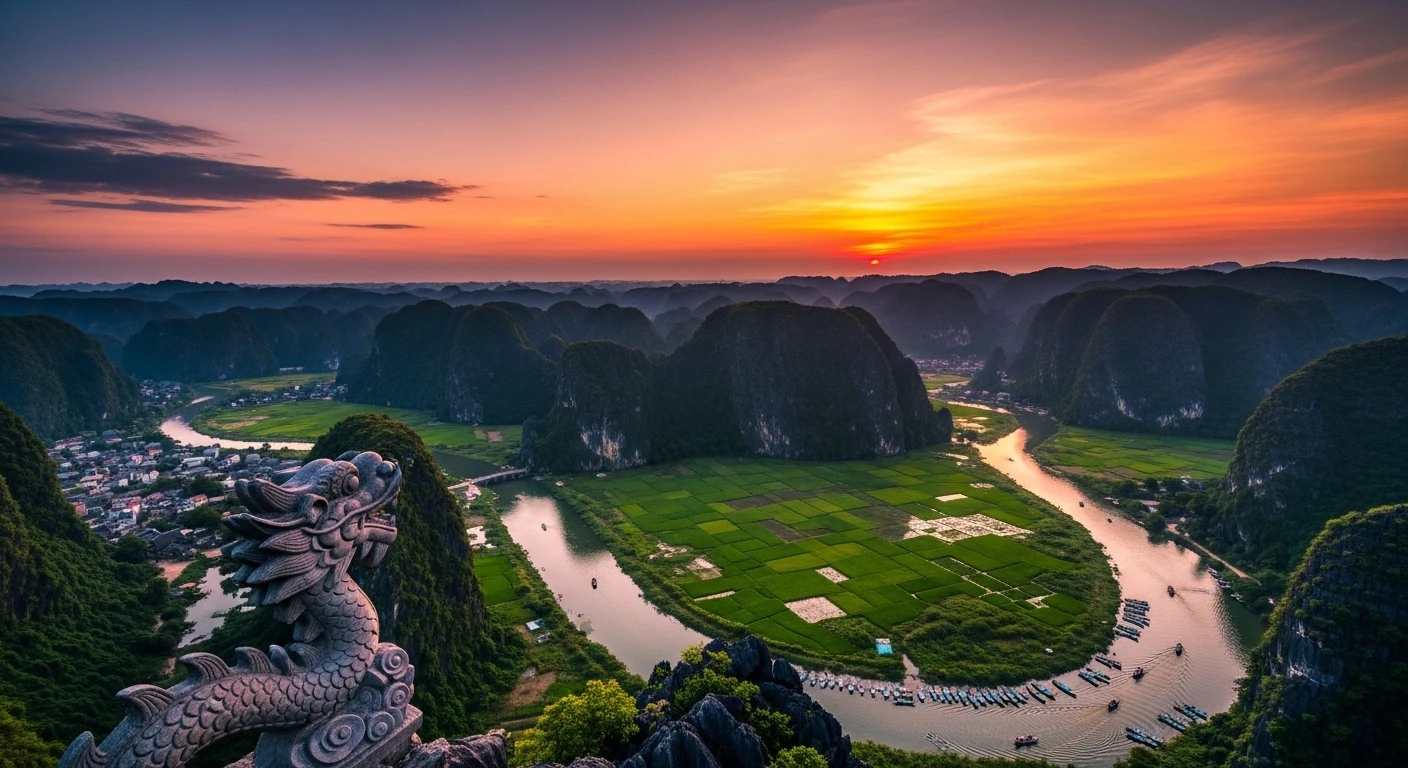
The reward for the ascent: a sweeping panorama of Tam Coc's karst formations at sunset.
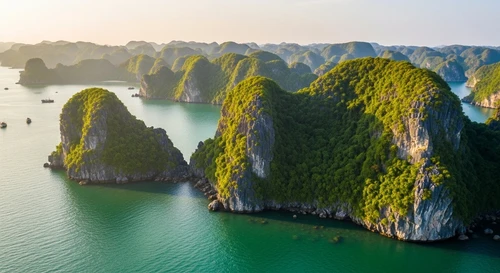
For travelers charting a course through northern Vietnam, Ninh Binh is a non-negotiable. Often dubbed "Ha Long Bay on Land," its otherworldly beauty is etched into the limestone karsts that pierce the sky and the serpentine rivers that carve through verdant rice paddies. And at the nexus of this natural wonder, Hang Mua offers not just a view, but an experience – a pilgrimage to the dragon's lair, culminating in what many consider the most spectacular sunset in the entire region.
The Approach: From Rice Paddies to the Dragon's Foot
Ninh Binh is best explored by bicycle or motorbike, allowing you to weave through its picturesque countryside at your own pace. The journey to Hang Mua is part of the adventure. Picture yourself pedaling past emerald rice fields, the air thick with the scent of damp earth and distant cooking fires. Water buffalo might lazily observe your passage, and local farmers tending their crops offer a glimpse into a life lived in harmony with this ancient landscape.
The entrance to Hang Mua is a modest affair, a gateway hinting at the grandeur that lies beyond. You'll pay a small entrance fee, a pittance for the reward awaiting you. The path from the ticket booth leads you past tranquil ponds, dotted with lotus flowers, and through a garden setting that gradually transitions into the base of the mountain. The anticipation builds with every step, the sheer scale of the karst looming larger.
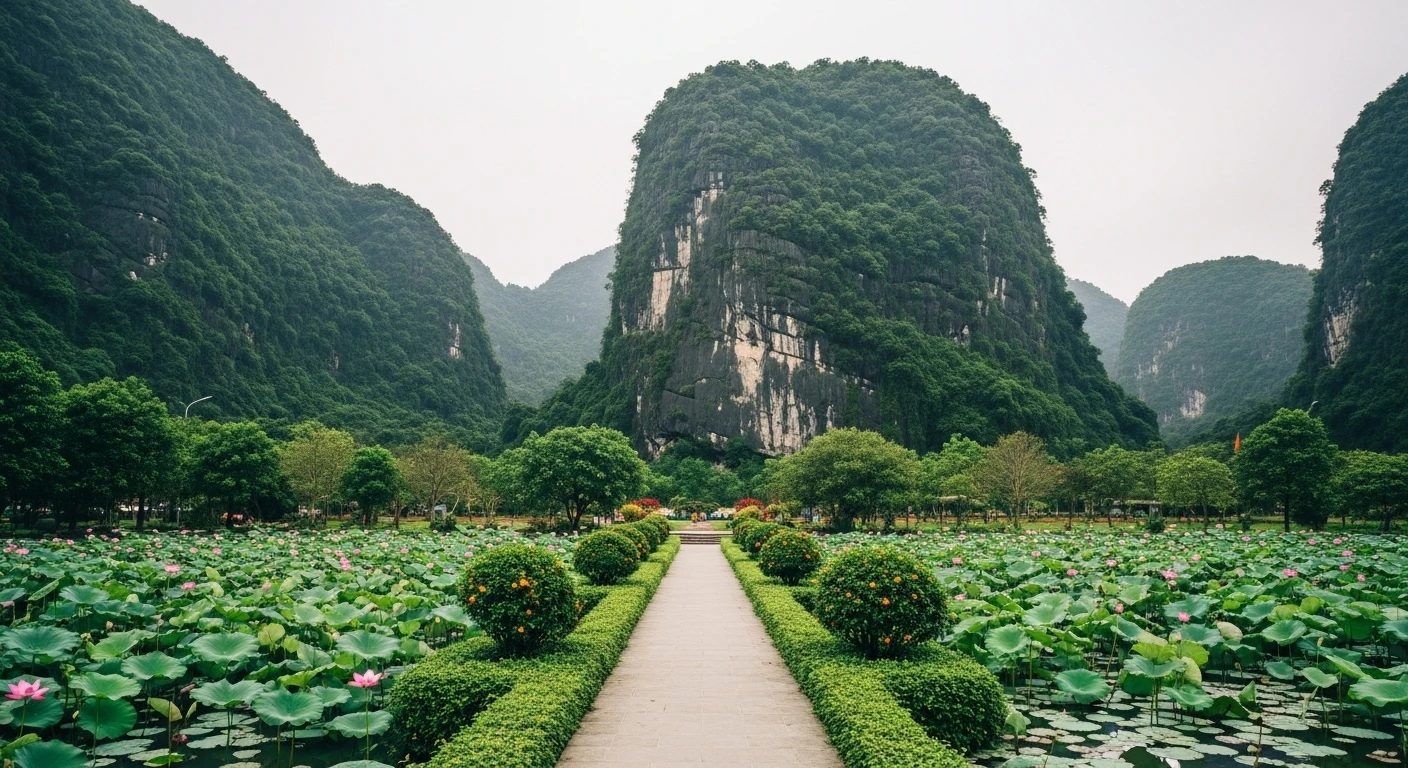
The serene approach to Hang Mua, with vibrant flora setting the stage for the climb.
The Ascent: 500 Steps to the Sky
And then, you see them: the steps. Five hundred of them, carved into the mountainside, winding their way upwards like a serpentine trail. This is the "Dragon Mountain" climb, a fittingly mythic path to the dragon that awaits at the summit. The steps are made of stone, some worn smooth by countless feet over the years, others rougher, demanding careful footing.
The climb is steep, no doubt. There are moments of exertion, where the humidity presses in and your breath comes quicker. But it's not an insurmountable challenge. Along the way, strategically placed rest stops offer a chance to catch your breath, admire the ever-expanding views, and marvel at the ingenuity of the path. As you ascend, the landscape below begins to unfurl: the Tam Coc river glinting like a ribbon, the patchwork of rice paddies in varying shades of green and gold, and the distant silhouettes of other karst formations.
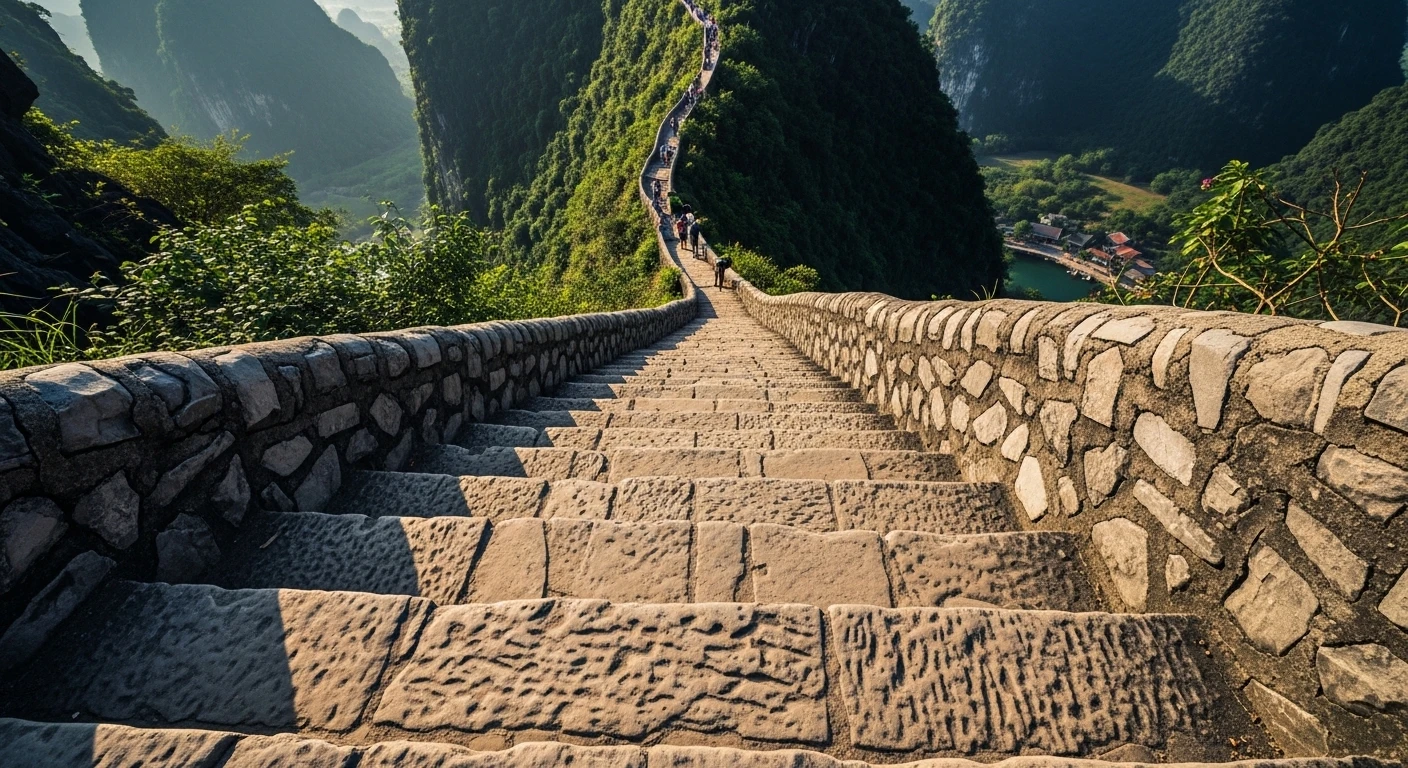
The iconic stone steps of Hang Mua, a challenging but rewarding climb.
The Summit: The Stone Dragon and the Panoramic Vista
Reaching the top is a triumph. You'll first encounter the magnificent stone dragon, a sentinel carved with intricate detail, its gaze fixed on the horizon. It's a powerful symbol, guarding this elevated sanctuary. But the true prize, the reason this climb is etched into so many travel itineraries, is the view.
From this vantage point, the Tam Coc valley is laid out like a topographical map brought to life. You can see the sampans, tiny specks navigating the Ngo Dong River, the narrow pathways between the rice fields, and the dramatic, eroded limestone karsts that define Ninh Binh's unique beauty. The sheer scale and tranquility are overwhelming.
This is where you'll want to settle in and wait for sunset. As the sun begins its descent, the sky ignites in a symphony of color. Oranges, pinks, and purples paint the clouds, casting a warm, ethereal glow over the entire landscape. The shadows lengthen, deepening the contours of the karsts and transforming the scene into a truly magical spectacle. It’s a moment of profound peace, a connection to the raw, untamed beauty of Vietnam.
The Sunset: Nature's Grand Finale in Tam Coc
Sunset at Hang Mua is more than just a pretty view; it's an event. As the golden hour bathes the valley, the atmosphere shifts. The gentle breeze seems to whisper secrets of the ancient landscape. The sounds of the distant river and the calls of birds blend into a soothing soundtrack. It’s a moment for quiet reflection, for soaking in the sheer magnificence of the natural world.
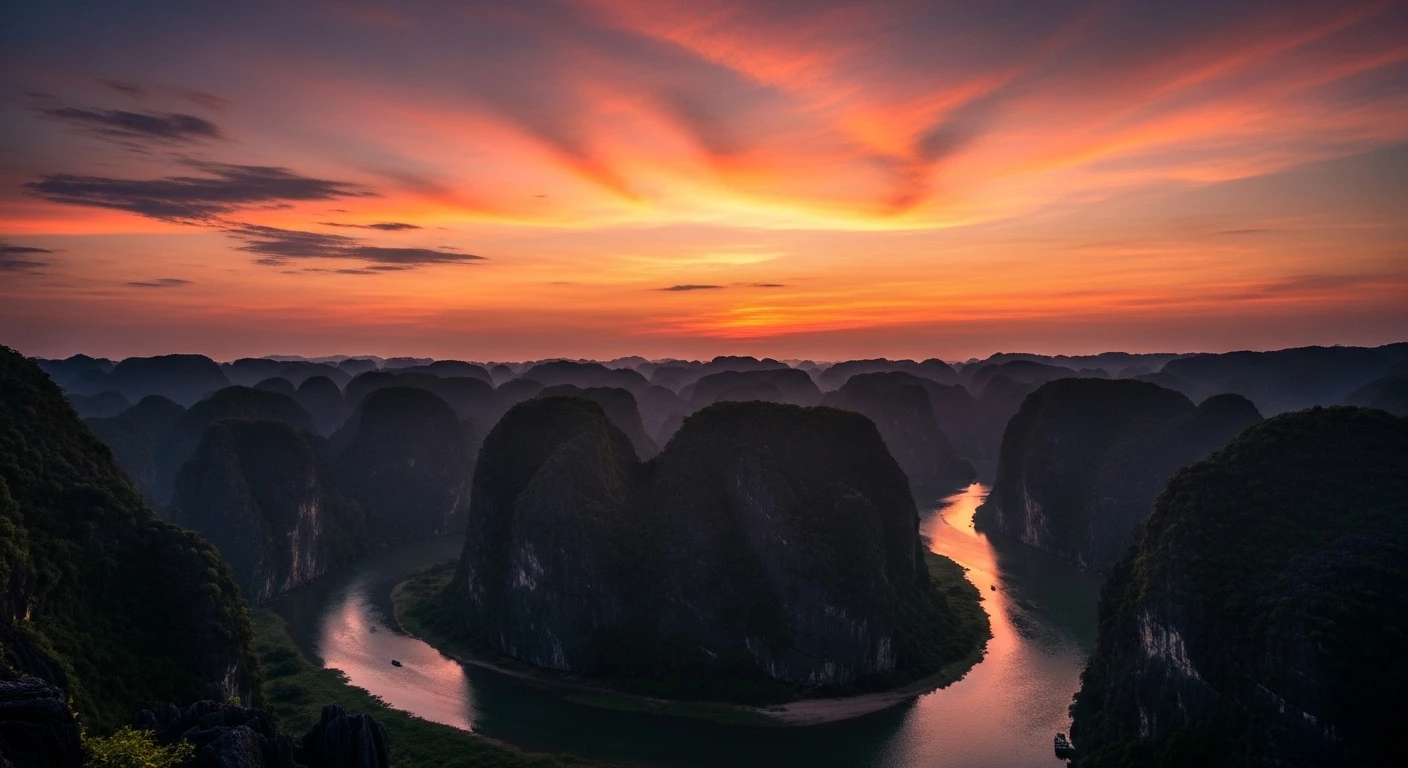
The breathtaking colors of sunset from Hang Mua Peak, a truly unforgettable experience.
This viewpoint has earned its reputation for a reason. It offers an unobstructed, sweeping panorama that captures the essence of Ninh Binh's "Ha Long Bay on Land" charm. Unlike other viewpoints that might be crowded or offer partial vistas, Hang Mua delivers a comprehensive, awe-inspiring scene that feels both intimate and epic. Many travelers agree that this is the pinnacle of their Ninh Binh experience, a memory that will linger long after they've descended the dragon's steps.
Essential Tips for Your Dragon's Ascent
To make your pilgrimage to Hang Mua Peak as enjoyable as possible, here are a few practical pointers:
- Best Time to Visit: Aim for the late afternoon. This allows you to conquer the steps before the peak sunset hour and ensures you witness nature's grand finale. Arriving too early might mean braving the midday heat.
- What to Wear: Comfortable walking shoes or hiking boots are a must. The stone steps can be uneven. Light, breathable clothing is advisable, especially during warmer months.
- Stay Hydrated: Carry plenty of water. There are vendors at the entrance and sometimes along the lower parts of the climb selling drinks, but it's wise to have your own supply.
- Sun Protection: A hat, sunglasses, and sunscreen are essential, especially during the climb.
- Footwear: Avoid flip-flops or sandals; they offer poor grip on the steps.
- Respect the Site: This is a place of natural beauty and cultural significance. Please dispose of your trash responsibly.
Beyond the View: Why Hang Mua Captures the Heart
Hang Mua Peak is more than just a viewpoint; it’s an emblem of Ninh Binh's unique charm. It combines physical challenge with breathtaking reward, a dash of mythology with pure, unadulterated natural beauty. The journey up the 500 steps mirrors the unfolding discovery of the landscape below.
Planning Your Ninh Binh Adventure?

Experience the iconic river journey that complements the views from above.
The dragon at the summit serves as a potent reminder of Vietnam's rich folklore, adding a layer of mystique to the already captivating scenery. It's a place that ignites the imagination and stays with you. Whether you’re a seasoned hiker or simply someone who appreciates a spectacular view, the climb up Hang Mua Peak is an essential part of the Ninh Binh experience, offering a perspective that can be found nowhere else.
A Complete Ninh Binh Itinerary?
See how Hang Mua fits into a larger exploration of this incredible region.
Beyond the Peak: Discovering More of Ninh Binh
While Hang Mua Peak offers an unparalleled viewpoint, Ninh Binh province is a treasure trove of experiences. The gentle boat rides through Tam Coc, where you drift beneath karst formations and alongside vibrant rice paddies, are essential. Here, local women row gracefully with their feet, a unique spectacle in itself.
Venture into the Trang An Grottoes, a UNESCO World Heritage site, for a similar but distinct boat tour experience. This complex system of caves and tunnels offers a more adventurous journey, with some tunnels so low you might have to duck. The landscape here is equally dramatic, with ancient temples nestled amidst the karsts.
For those interested in history and culture, Hoa Lu, the ancient capital of Vietnam, offers a glimpse into the country's past with its temples and pagodas. And no visit to Ninh Binh is complete without sampling the local delicacy: De Nui, or mountain goat meat, prepared in various delicious regional styles.
Capturing the Magic: Photography at Hang Mua
Hang Mua Peak is a photographer's dream. To capture its essence:
- Golden Hour is Key: The light during sunrise and sunset is soft, warm, and dramatic. Visit during these times for the most captivating shots.
- Embrace the Panorama: Use a wide-angle lens to capture the vastness of the valley. Look for leading lines, such as the river or the rice field paths, to draw the viewer's eye.
- Include the Dragon: Don't forget to photograph the stone dragon itself. Its presence adds a mythical element to your shots.
- Look for Details: Capture the texture of the stone steps, the vibrant lotus flowers, or the silhouette of a sampan on the river.
- People in the Landscape: Small figures of people can add scale and context to your landscape shots.
Patience is a virtue here. Sometimes, waiting for that perfect moment when the light hits the karsts just right, or a boat drifts into the perfect position, is what makes the difference between a good photo and a great one.
The Enduring Allure of the Dragon Mountain
The climb up Hang Mua Peak is more than just a physical endeavor; it’s a journey into the heart of Vietnam's stunning karst landscape and a testament to the enduring allure of natural beauty. The 500 steps are a challenge, yes, but they are also a gateway to an unforgettable vista, a place where the majestic stone dragon presides over a kingdom of emerald paddies and shimmering waterways.
For any traveler seeking to truly understand the magic of Ninh Binh, the ascent to Hang Mua Peak is an absolute must. It offers not just a view, but an experience – a moment of awe that encapsulates the spirit of this remarkable corner of Vietnam. So, lace up your boots, pack your water bottle, and prepare to be captivated. The dragon awaits.